
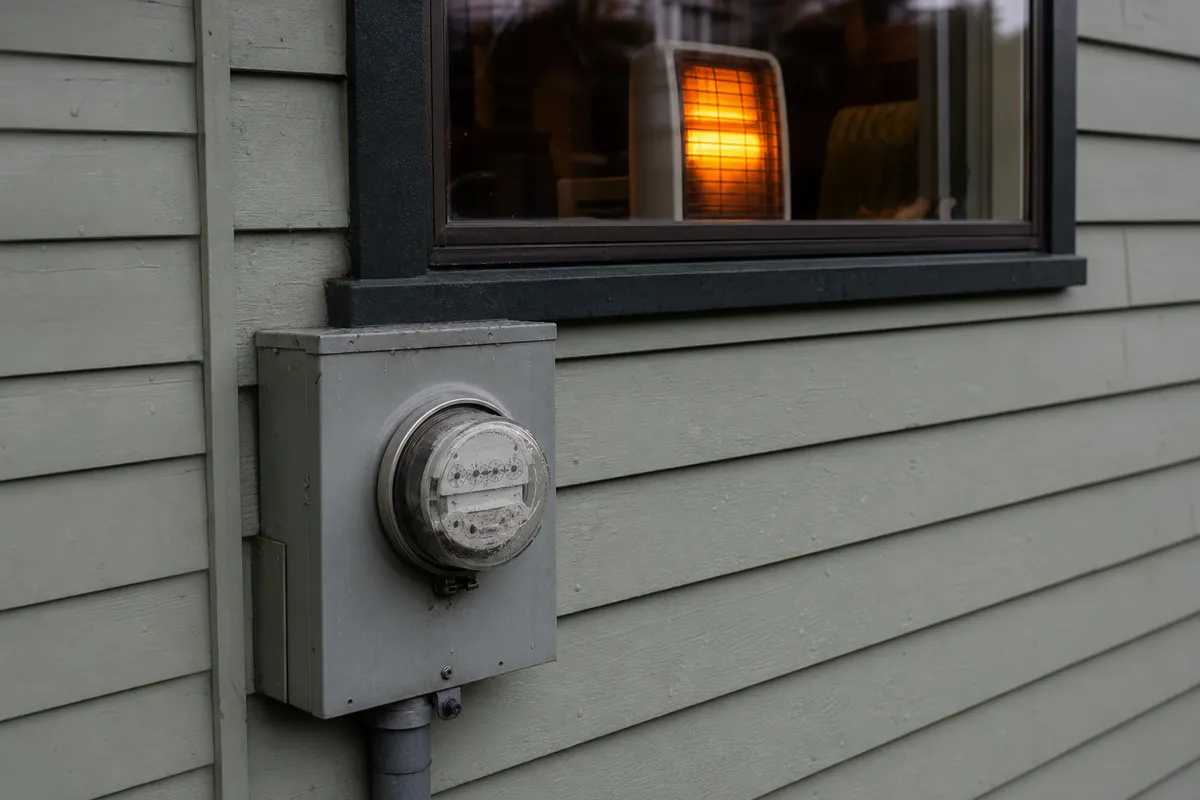
Last February I took a call from a homeowner in Burien whose Seattle City Light bill had jumped from about $180 to over $460 in one cycle. She was convinced someone was stealing power. An hour with a clamp meter at her panel found something less dramatic: her heat pump’s backup heat strips had been running almost continuously for three weeks because an outdoor sensor had failed. Fifteen kilowatts of pure resistance heat, around the clock, will do exactly that to a bill.
That call stuck with me because it’s so typical. When a bill doubles, people imagine phantom loads or a meter problem. Across Seattle, Shoreline, and Renton, it’s almost always one of a handful of big, boring appliances misbehaving — and the fix is usually cheaper than two months of the inflated bill.
TL;DR
- In an electrically heated PNW home, resistance heating is the biggest load by far — often more than everything else combined in winter.
- The water heater is usually second; a failed element or stuck thermostat can quietly add $50–$100 a month.
- Most common causes of a doubled bill: heat strips running instead of the heat pump, a stuck water heater, and plug-in space heaters.
- Seattle City Light and PSE bill in tiers — heavy winter use gets charged at the higher rate, magnifying the pain.
- If usage doesn’t explain the bill, an electrical inspection can rule out failing equipment before it becomes a safety issue.
- Replacing resistance heat with a heat pump typically cuts the heating line item by half or more.
What actually uses the most electricity in a Puget Sound home?
People guess lights, TVs, and phone chargers. Those are rounding errors. Electricity use in our climate is dominated by things that make heat: space heating, hot water, the dryer, the oven. Here’s what the big loads look like in a typical King County home, at rates of approximately 12–14 cents per kilowatt-hour (your exact rate depends on utility and tier):
| Load | Typical draw | Winter monthly use | Approx. monthly cost |
|---|---|---|---|
| Electric resistance heat (baseboard/furnace) | 10–20 kW total | 1,500–3,000 kWh | $190–$400 |
| Heat pump (same house, same comfort) | 2–5 kW | 500–900 kWh | $65–$120 |
| Electric water heater | 4.5 kW | 300–500 kWh | $40–$65 |
| Electric dryer | 5 kW | 60–100 kWh | $8–$13 |
| Electric oven/range | 3–8 kW | 50–90 kWh | $7–$12 |
| Level 2 EV charging (12,000 mi/yr) | 7–11 kW | 250–350 kWh | $32–$46 |
| Refrigerator | 0.1–0.2 kW average | 40–60 kWh | $5–$8 |
Two things jump out. Resistance heat is in a category of its own — it can cost more per month than every other row combined. And the same house at the same temperature with a heat pump uses roughly a third of the energy, which is why heat pump installation is the biggest lever on a winter bill here. For current incentives, see our Washington heat pump rebate guide.
How do I actually read my Seattle City Light or PSE bill?
Don’t look at the dollar amount first — look at the kilowatt-hours. Seattle City Light charges a lower rate for a first block of usage and a higher rate for everything above it, so heavy months get billed disproportionately at the higher tier. PSE’s residential rates work similarly, and both utilities show daily usage graphs in your online account. That daily view is the diagnostic gold mine: usage that stepped up sharply on a specific date tells you something changed or failed that day.
A useful baseline: most non-electrically-heated homes in this area land around 600–900 kWh a month. Electrically heated homes in January can legitimately hit 2,500–3,500 kWh. Outside those bands, something specific is driving it.
Why did my bill suddenly double?
When a bill doubles in one cycle, I look for one of these culprits, in this order:
- Heat strips carrying the load on a heat pump system. Backup resistance coils should run briefly during defrost or a cold snap. A failed sensor, a miswired thermostat, or a refrigerant problem can leave them running full time — like my Burien call.
- A failed water heater element or a thermostat stuck on. A lower element burns out and the upper element runs constantly trying to compensate, or a stuck thermostat keeps the tank heating around the clock. If your tank is rumbling or cycling constantly alongside a high bill, that’s worth a water heater repair visit — typically $189–$800 depending on parts.
- Plug-in space heaters. One 1,500-watt heater running 8 hours a day adds roughly 360 kWh a month — around $45–$50. Two or three running quietly in bedrooms is a doubled bill by itself.
- Heat tape, aquarium heaters, and well pumps. Pipe heat tape energized all winter, a big aquarium heater, or a well pump short-cycling on a failing pressure tank — the sleeper loads I find a few times every year.
- An EV in the driveway. Not a malfunction, but underestimated. Home charging adds roughly $30–$60 a month — see what a proper EV charger installation costs around Seattle.
How do I narrow it down myself before calling anyone?
Here’s the process I give homeowners over the phone. It costs nothing and solves the mystery more than half the time:
- Pull up your utility’s daily usage graph and find the date usage stepped up.
- Check what changed around that date: cold snap, new appliance, thermostat schedule change.
- If you have a heat pump, watch the outdoor unit while the heat runs. Not spinning while the house heats means the strips are doing the work.
- Check the water heater (don’t open the panels). Constant cycling, or hot pipes when nobody has used water for hours, points to the thermostat or element.
- Walk the house and count plug-in heaters, heat tape, and always-on equipment. Unplug what you can spare for 24 hours and compare the daily graph.
- Read the meter yourself at the same time two days in a row and compare the delta to the utility’s graph.
If you finish that list and the usage still doesn’t add up, stop guessing. Unidentified continuous loads sometimes turn out to be failing equipment — a seized motor, a shorted element — and those are heat sources where you don’t want heat.
“The calls that worry me are the ones where the homeowner says the bill doubled and nothing in the house changed. That sentence is the reason we book the inspection quickly. Bills follow physics — if the money went up, the energy went somewhere, and our job is to find out where before it becomes a bigger problem than money.”
— Sergei Petrov, Founder & Lead HVAC Technician at SPS Pro Services
When is a high bill an electrical problem worth an inspection?
Most high bills are usage problems, not wiring problems. But I want an electrical inspection on the calendar when a high bill comes with any of these: breakers that trip or feel warm, a warm panel cover, flickering when large loads start, buzzing from the panel or an outlet, or a continuous load you’ve confirmed on the meter but can’t trace. A service call starts at $149 — the cheap way to rule out a loose connection or a failing motor, both of which waste energy as heat exactly where you don’t want it. If your panel is older, my article on the signs a panel needs upgrading covers what we look for.
Does switching from resistance heat to a heat pump really cut the bill?
Yes, and it’s not close. Resistance heat converts one unit of electricity into one unit of heat — that’s its ceiling. A modern cold-climate heat pump moves two to three units of heat into the house for every unit of electricity it consumes, even in a Seattle January. Per the table above, that’s the difference between a $190–$400 heating line item and a $65–$120 one, for the same indoor temperature — and Washington’s mild winters are close to ideal heat pump territory. If your current system is a gas furnace, the math is different — start with keeping it healthy via furnace repair and compare fuel costs before switching.
Frequently asked questions
Could my meter just be wrong?
It’s rare — in twenty-plus years I’ve seen genuine meter errors maybe twice. Read the meter at the same time on two consecutive days and compare the difference to the utility’s daily graph. If they match, the meter is honest and the load is real.
Is it worth unplugging chargers and electronics to save money?
Phantom loads are real but small — usually 20–50 kWh a month for a whole house, a few dollars. It will never explain a doubled bill. Focus on heat-producing loads first.
My bill is high but my home has gas heat. Now what?
Then look at the water heater (if electric), dryer, space heaters, and continuous loads. A furnace blower that never shuts off — stuck fan relay, or a thermostat set to “on” instead of “auto” — is a common find.
Sources
- U.S. Department of Energy — Energy Saver
- ENERGY STAR — Air-Source Heat Pumps
- Puget Sound Energy — Rebates
If your bill jumped and you can’t find the load, call SPS Pro Services at (206) 427-8907 and we’ll trace it — starting with a proper electrical inspection.