
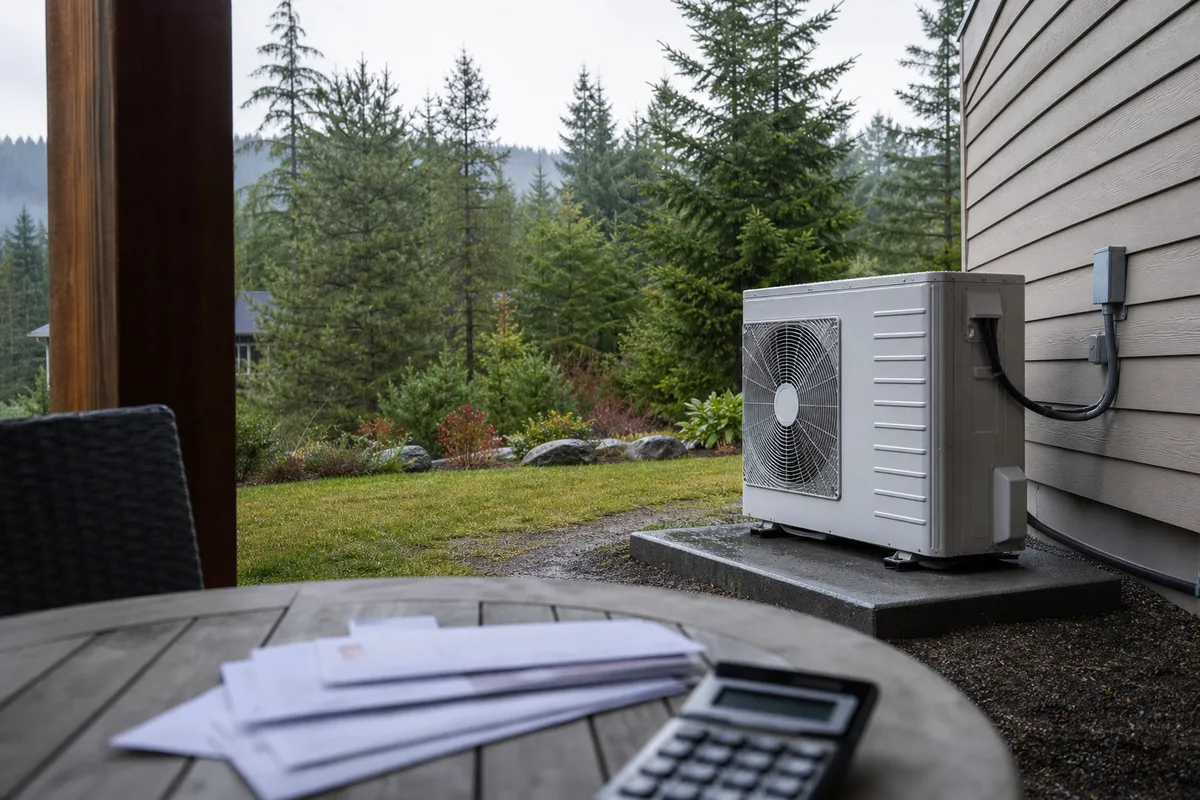
If you’ve been putting off replacing an aging furnace or window AC units because a heat pump feels expensive, this is the year to look again. Between federal tax credits and utility rebates from PSE and Snohomish County PUD, a good chunk of the cost can come back to you — but only if you know which paperwork to file and when. I talk to homeowners almost every week who left $500 to $1,500 on the table simply because nobody told them the rebate had to be requested before the old equipment got hauled away.
I’m Alina, and I coordinate service calls and help people plan installs at SPS Pro Services. Here’s what I tell customers in Seattle, Bellevue, and Everett when they call asking “wait, do I actually qualify for anything?”
TL;DR
- Federal tax credit (25C): up to $2,000 back on a qualifying ducted or ductless heat pump, claimed on your taxes, no income cap.
- PSE electric customers (much of the Eastside, South King County, parts of Snohomish) can typically get utility rebates in the $500–$1,800 range for qualifying heat pumps.
- Snohomish County PUD customers, including Everett, have their own rebate schedule, often similar in size but with different qualifying equipment lists.
- Seattle City Light customers (inside Seattle city limits) are not PSE electric customers — check SCL’s own program instead of PSE’s electric rebate.
- Rebate amounts and rules change year to year, so confirm current numbers before you sign a contract, not after.
- Save every document: AHRI certificate, model/serial numbers, and the contractor invoice. Rebate applications get rejected constantly over missing paperwork.
Why Heat Pump Rebates Got Bigger
Washington State has pushed hard on electrification incentives the last few years, partly funded through the federal Inflation Reduction Act and partly through utility efficiency programs that PSE and SnoPUD are required to run. The short version: utilities get credit toward state efficiency mandates when customers switch from gas furnaces or resistance electric heat to heat pumps, so they’re willing to pay you to do it. That’s good news if your existing system is on its last legs, especially in older housing stock common around Seattle and Everett, where a lot of homes still run 1970s–1990s gas furnaces or baseboard heat that were never sized for today’s utility rates.
“Stack the incentives in the right order: utility rebate first, then the federal 25C credit at tax time. On a cold-climate heat pump install we did in Shoreline last winter, the combined stack covered close to $4,000 of the project — but only because the equipment hit the efficiency tier the paperwork required. Model numbers matter; check them before you sign.”
— Danil Sokolov, Heat Pump & Mini-Split Specialist at SPS Pro Services
Federal Tax Credits: What’s Actually Available
The federal Energy Efficient Home Improvement Credit (Section 25C) is the most reliable piece of this puzzle because it doesn’t depend on your utility territory. As of 2026, it covers 30% of the cost of a qualifying heat pump, capped at $2,000 per year, with no income restriction. You claim it when you file taxes, using the manufacturer’s certification and your installation receipt — your contractor should hand you an AHRI certificate showing the system meets the efficiency tier required for the credit.
There’s also been talk of larger point-of-sale rebates (sometimes called HOMES or HEAR rebates) tied to household income, administered through the Washington State Department of Commerce. These have been rolling out unevenly by state, and funding availability shifts, so I’d rather tell you to call the Department of Commerce or ask us directly at (206) 427-8907 than quote you a number that might be outdated by the time you read this.
PSE Rebates: Who Qualifies
Puget Sound Energy provides electric service to a lot of the Eastside and South King County — think Bellevue, Redmond, Kent, Renton — plus natural gas service across much of the Seattle metro. If PSE is your electric provider, their current program generally covers:
- Ducted air-source heat pumps replacing gas furnaces or electric resistance heat
- Ductless mini-split systems, often the better fit for homes without existing ductwork
- Heat pump water heaters, a smaller but real rebate line item worth asking about alongside your water heater repair needs
Typical PSE rebate amounts land in the $500 to $1,800 range depending on equipment type and efficiency rating, though the exact figure depends on the program guide in effect when you apply — these get revised annually. If you’re in Bellevue and unsure if you’re a PSE electric customer or Puget Sound Energy gas-only, check a recent utility bill; it’ll say plainly.
Snohomish PUD Rebates: Everett and Beyond
Snohomish County PUD serves electric customers across Everett and most of Snohomish County outside a few municipal exceptions. Their heat pump rebate program tends to mirror PSE’s structure — a set dollar amount per ton of capacity or per qualifying unit — but the equipment eligibility list and rebate caps are set independently, so don’t assume PSE numbers apply if you’re an Everett homeowner. SnoPUD has historically been a bit more generous on ductless systems for homes converting off electric baseboard heat, since that’s a bigger efficiency win for them.
What If You’re Inside Seattle City Limits?
This trips people up constantly. If you live inside Seattle itself, your electric utility is Seattle City Light, not PSE, even though PSE bills you for gas. Seattle City Light runs its own efficiency rebate programs, separate from PSE’s electric rebate. So if you’re comparing notes with a friend in Bellevue who got a PSE rebate, don’t assume the same number applies to your project in Seattle — check SCL’s current program page or ask us to confirm during your estimate visit.
Realistic Cost and Rebate Comparison
| Scenario | Typical installed cost (before rebates) | Federal credit | Utility rebate (typical range) |
|---|---|---|---|
| Ductless mini-split, single zone | $4,500 – $8,000 | Up to $2,000 | $500 – $1,000 |
| Ducted heat pump, whole-house | $8,000 – $16,000 | Up to $2,000 | $800 – $1,800 |
| Heat pump water heater | $2,200 – $3,800 | Up to $2,000 (combined cap) | $200 – $500 |
These are planning-level numbers, not a quote — every home’s ductwork, electrical capacity, and equipment sizing changes the final price. If your panel is older or already near capacity, factor in an electrical panel upgrade before adding heat pump load, especially if you’re also planning an EV charger installation down the road. Doing both at once often saves a second service call.
Preparing for the Technician Visit: Rebate Checklist
Before our team shows up for a heat pump installation estimate, pull together:
- A recent electric bill showing your utility (PSE, SnoPUD, or Seattle City Light)
- Your current furnace or heat pump’s age and fuel type, if known
- Photos of your electrical panel (label visible) and existing ductwork or lack thereof
- Any prior rebate paperwork if this isn’t your first efficiency upgrade
- A rough idea of which rooms run hot or cold — helps with zoning decisions
After installation, keep the AHRI certificate, the itemized invoice, and model/serial number photos in one folder. Rebate applications almost always require these together, and utilities will reject incomplete submissions rather than follow up.
When a Heat Pump Isn’t the Right First Move
Sometimes the smarter call is patching what you have. If your furnace is under ten years old and just needs a repair, rebates won’t offset a full replacement that doesn’t make financial sense yet — a furnace repair might buy you a few more winters. Same logic applies if your AC is still functional; an AC repair this summer can wait until you’re ready to convert to a heat pump that handles both heating and cooling in one system.
Mini-FAQ
Can I combine the federal tax credit with a utility rebate? Yes. They’re separate programs and stack — the federal credit is claimed on your tax return, the utility rebate is a separate application, usually submitted by you or your contractor after installation.
Do rebates apply to replacing a working system, or only a broken one? Most programs don’t require the old system to be broken. Voluntary upgrades from gas furnaces or electric resistance heat to heat pumps generally qualify, as long as the new equipment meets the efficiency tier listed in the program guide.
How long does a rebate application take to process? It varies by utility, but expect anywhere from a few weeks to a couple of months. Submit promptly after installation and keep a copy of everything you send.
Serving Seattle, Bellevue, Everett, and the rest of King and Snohomish counties — call SPS Pro Services at (206) 427-8907 and we’ll walk through which rebates actually apply to your address before you commit to anything.