
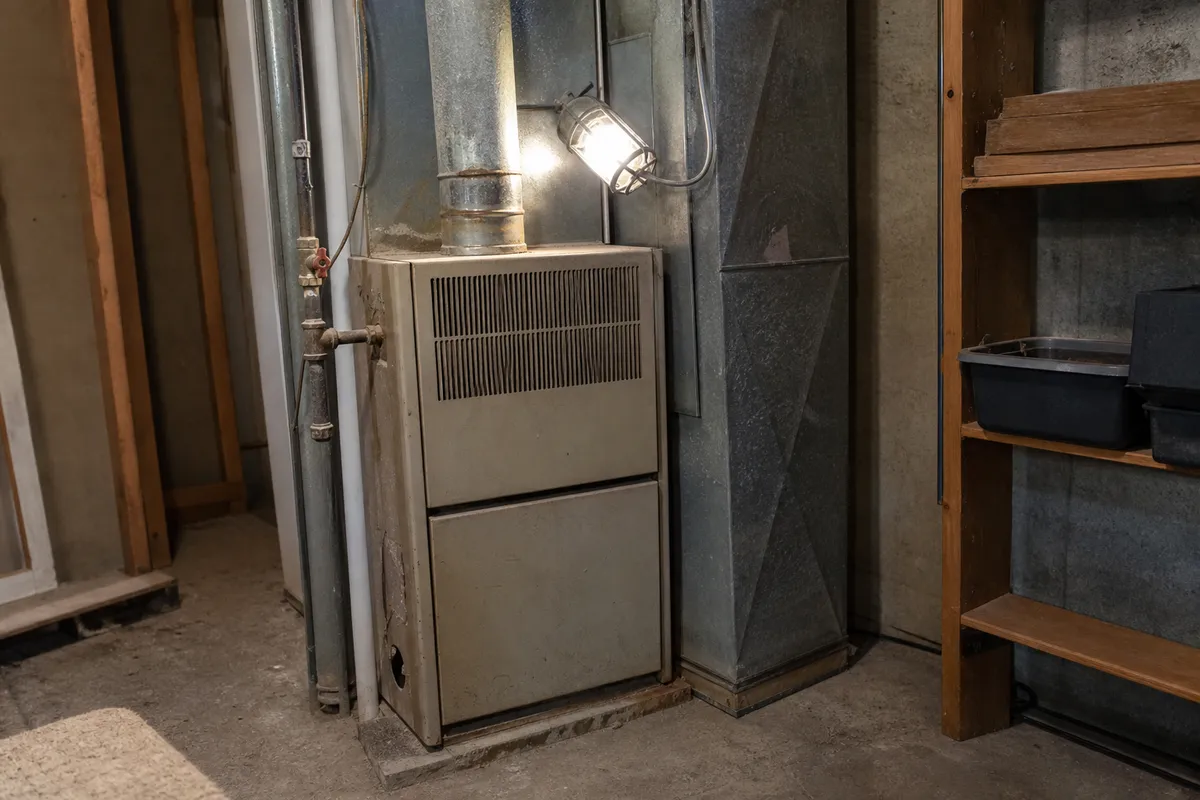
Last week I was in a crawlspace in Shoreline looking at a 1998 gas furnace. The homeowner wanted a straight answer: fix the failed inducer motor for around $600, or stop putting money into a 28-year-old machine. The furnace had outlived its design life by nearly a decade, mostly because the previous owner ran it gently and changed filters religiously. But the heat exchanger was showing surface rust, the blower bearings were audibly tired, and the flue connection had corrosion I didn’t like. I told him what I’ll tell you here: the repair would work, and it would still be the wrong move.
Two days earlier I’d condemned a furnace in Everett that was only 11 years old. Same brand, same tier of equipment. The difference was a crawlspace with standing water every winter, a filter that hadn’t been touched in three years, and an oversized unit that short-cycled itself to death. Age is a number. Condition is what matters, and around Puget Sound, condition depends heavily on things homeowners can actually control.
So when someone asks me how long a furnace lasts here, my honest answer is a range with an asterisk. This is the long version of that answer, with the numbers I use on real service calls from Renton to Everett.
TL;DR
- A gas furnace in Western Washington typically lasts 15-20 years; electric furnaces run 20-30 because they have no combustion parts to corrode.
- Our damp marine climate is hard on furnaces: moisture corrodes heat exchangers and burners, especially in crawlspaces and unheated garages.
- The two biggest lifespan killers I see are neglected filters and oversized furnaces that short-cycle.
- My decision rule: multiply the repair quote by the furnace’s age. Over $5,000-6,000, put the money toward replacement instead.
- A new furnace installed by us runs $4,800-$9,800; repairs run $189-$950. The math usually settles the argument on its own.
Why do furnaces near Puget Sound age differently?
The national “15-20 years” figure you’ll see from sources like the U.S. Department of Energy assumes average conditions. Western Washington is not average in a few specific ways.
First, moisture. Furnaces in crawlspaces and vented garages here live in 70-90% relative humidity for half the year. That corrodes heat exchangers, burner assemblies, and electrical connections faster than in dry climates. When I open up a 12-year-old furnace from a dry Bellevue basement and a 12-year-old furnace from a Kenmore crawlspace, they look five years apart.
Second, run pattern. Our furnaces run long and steady from October through April, then sit idle all summer. Long idle periods let condensation settle on cold metal, and the first fall startup burns off a season of accumulated dust and surface rust. Furnaces that also serve as the air handler for summer cooling age more evenly.
Third, oversizing. A lot of older homes around Seattle have furnaces sized for a colder climate or sized by the “bigger is safer” method. An oversized furnace reaches temperature fast, shuts off, and repeats. Each ignition cycle is the hardest moment of a furnace’s life, so a short-cycling unit can rack up double the wear at the same age. This is one of the checks we run during furnace maintenance visits, because it changes the whole lifespan forecast.
Electric furnaces sidestep most of this. No burners, no heat exchanger, no flue. Heating elements and relays fail, but that’s cheaper to fix, which is why 20-30 years is realistic for them.
Is my 15-year-old furnace worth repairing?
Here’s the rule I actually use standing in front of a customer: multiply the repair cost by the age of the furnace. If the result is over roughly $5,000-6,000, replacement deserves a hard look. A $300 flame sensor job on a 15-year-old furnace scores 4,500, so fix it. A $900 inducer motor on that same furnace scores 13,500, and I’d rather see that $900 go toward a new system.
The logic behind the multiplication: repair cost measures how serious the failure is, and age measures how many more failures are queued up behind it. An old furnace that needs an expensive part today is statistically close to needing another one.
There’s a second question layered on top: repair, replace with another furnace, or switch to a heat pump. For a lot of homes in our mild climate, a heat pump installation at $6,500-$15,500 beats a straight furnace swap because you get cooling too, and current PSE and Snohomish PUD offers can take a real bite out of the price. I covered that comparison in detail in heat pump vs. furnace for Seattle homes.
“About a third of the furnace replacement quotes we run end up as heat pump installs instead. Once a homeowner sees that the equipment lasts about as long and they get summer cooling in the same box, the old furnace-for-furnace swap gets harder to justify.”
— Danil Sokolov, Heat Pump & Mini-Split Specialist at SPS Pro Services
What are the warning signs a furnace is near the end?
No single symptom condemns a furnace, but these cluster in the final years:
- Repair calls getting closer together. Two significant repairs in three years on a 14+ year furnace is the pattern I trust most.
- Rising gas bills with no change in habits, which usually means declining combustion efficiency or a tired blower.
- Yellow or lazy burner flames instead of crisp blue ones.
- Rumbling, banging, or metallic scraping that wasn’t there last season.
- Visible rust on the cabinet or, worse, on the heat exchanger during inspection.
- Rooms heating unevenly when they used to heat fine.
- The furnace running noticeably longer to hit the same thermostat setting.
If yours is blowing air that just isn’t warm, that’s a separate diagnostic path; I wrote up the common causes in furnace not blowing hot air. Sometimes it’s a $189 fix on a furnace with years left.
What do repair and replacement actually cost around Seattle?
Numbers from our own job sheets across King and Snohomish counties:
| Scenario | Typical cost | Makes sense when |
|---|---|---|
| Minor repair (flame sensor, igniter, capacitor) | $189 - $450 | Almost any furnace under 18 years |
| Major repair (inducer, blower motor, control board) | $500 - $950 | Furnace under 12-13 years old |
| Gas furnace replacement, installed | $4,800 - $9,800 | 15+ years old with a major failure |
| Heat pump replacing a furnace, installed | $6,500 - $15,500 | You also want cooling; rebates available |
| Diagnostic visit | Credited toward the repair | Any no-heat situation |
For a deeper breakdown of what drives the replacement price up or down, see how much a new furnace costs.
What can I do to stretch the years I have left?
You can’t move your house to Arizona, but you control more of the lifespan equation than you’d think. The short list I give every customer:
- Change 1“ filters every 1-3 months, thicker media filters every 6-12. Nothing else on this list matters if you skip this one.
- Get a professional tune-up each fall so corrosion and combustion problems get caught early. Our furnace maintenance visits exist for exactly this.
- Keep supply and return vents open. Closing vents to “save heat” raises static pressure and cooks the blower.
- If the furnace lives in a crawlspace, deal with standing water and ground moisture. A $20 vapor barrier repair can buy years.
- Watch for short-cycling (on and off in under 5 minutes). If you see it, have the sizing and limit controls checked.
- Keep the area around the furnace clear so it can breathe, especially in garage installs.
- If your ducts are visibly shedding dust, consider duct cleaning ($350-$700) so the blower isn’t chewing through debris all winter.
Frequently asked questions
Can a furnace last 30 years?
Gas furnaces occasionally do, but I don’t recommend aiming for it. Past 20 years, efficiency has usually dropped, parts get scarce, and heat exchanger corrosion risk climbs. Electric furnaces reaching 25-30 years is common and much less concerning, since there’s no combustion side to worry about.
Does the brand matter for lifespan?
Less than installation quality does. A mid-tier furnace sized correctly, with clean ducts and regular filter changes, will outlast a premium unit that was oversized and neglected. When we do a furnace installation, the load calculation is the step that protects the next 20 years.
My furnace works fine at 18 years old. Should I replace it anyway?
Not on age alone, but start planning. Get the heat exchanger inspected annually, price out replacement now while you have time to compare options, and set money aside. The worst deals get made in January with no heat and no time to think.
Sources
Not sure whether your furnace has another winter in it? Call SPS Pro Services at (206) 427-8907 or book a furnace replacement assessment and we’ll give you the honest math.