
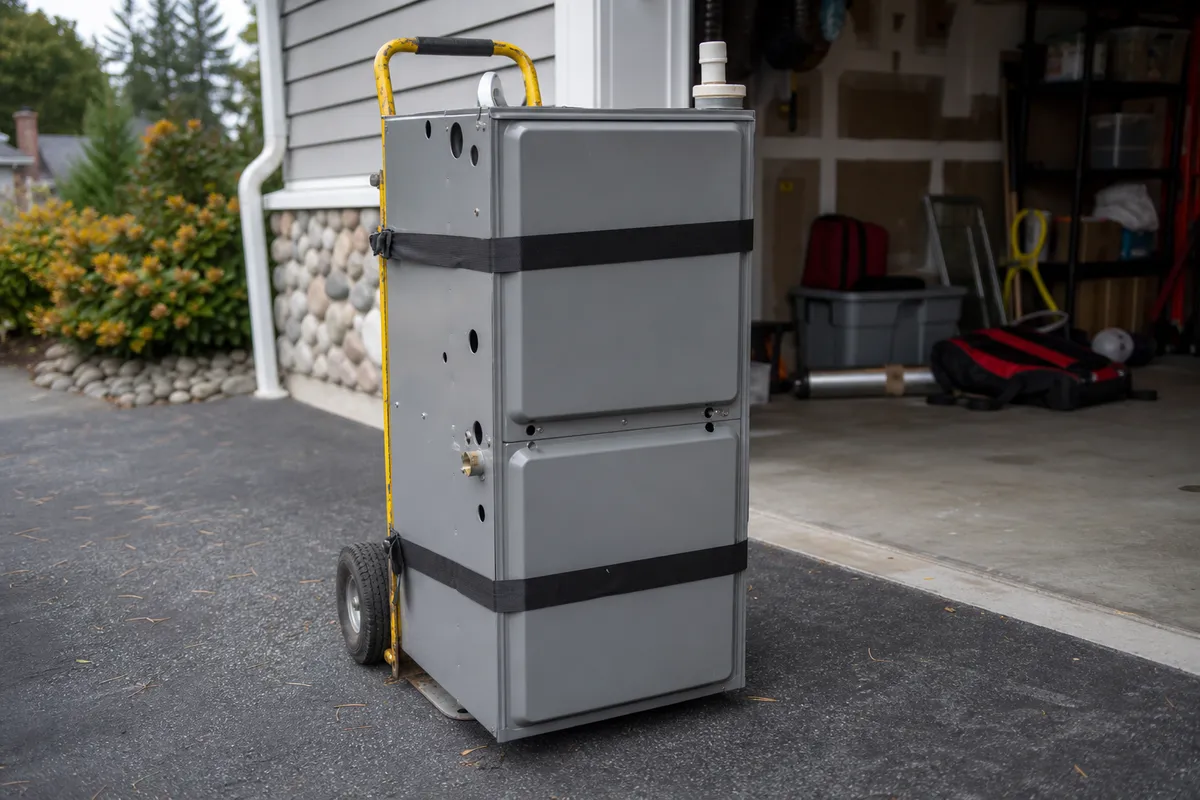
If your furnace is making a new noise every week, or your energy bill jumped and nobody in the house can explain why, you’re probably wondering what a replacement actually costs around here. Not a national average pulled from a random website — an actual number for a house in Seattle, Bellevue, or Everett, where crawl spaces are damp, attics are tight, and half the housing stock predates 1980.
I’m Alina, and I spend most of my week on the phone with homeowners asking exactly this question. Here’s what I tell them.
TL;DR
- Most straight-forward gas furnace replacements in the Seattle area land between $4,200 and $8,500 installed, depending on efficiency tier and ductwork condition.
- High-efficiency (95%+ AFUE) units with modifications for venting or condensate drainage run $7,000 to $12,000.
- If your ducts, panel, or vent need upgrading too, add $800 to $3,500 depending on scope.
- Washington State and PSE rebates can knock $500 to $2,000 off a heat pump switch, sometimes more than a same-type furnace swap.
- A same-day emergency swap in January costs more than a planned one booked in September — timing matters.
- Financing is common; monthly payments usually beat paying for emergency repairs on a 20-year-old unit one winter at a time.
Why Furnace Prices Vary So Much Around Here
Two identical furnaces can cost different amounts installed thirty minutes apart, and it’s rarely about markup. It’s about the house.
Homes in Wallingford, Ravenna, and parts of Everett’s older neighborhoods often have narrow basements or crawl spaces that add labor time. Newer construction in places like Sammamish or Mill Creek usually has clean duct runs and easier access, which keeps labor lower. If your existing furnace is in a closet with six inches of clearance, expect that reflected in the quote — not because the equipment costs more, but because the job takes longer and sometimes requires code updates to venting or combustion air.
Fuel type matters too. Most of the region runs on natural gas through PSE in Seattle and much of King County, while parts of Snohomish County get electricity from Snohomish County PUD, a public utility with its own rate structure and rebate programs. If your home is all-electric, you might be comparing a furnace against a ducted heat pump, which is worth a real conversation — see our page on heat pump installation for how that comparison usually plays out cost-wise over a heating season.
“Two quotes for ‘a new furnace’ can be thousands apart and both be honest. The difference is what’s included: permit, venting corrections, a properly sized unit versus matching the old label, and whether the ductwork static pressure was ever measured. Ask each bidder what’s in the number — the cheapest quote is often the one that skipped the permit.”
— Sergei Petrov, Founder & Lead HVAC Technician at SPS Pro Services
2026 Cost Ranges by Furnace Type
| Furnace Type | Typical AFUE | Installed Cost Range | Notes |
|---|---|---|---|
| Standard efficiency gas | 80-83% | $4,200 - $6,500 | Simplest venting, lowest upfront cost |
| High-efficiency gas | 95%+ | $7,000 - $12,000 | Needs PVC venting and condensate drain, higher gas savings |
| Electric furnace | N/A | $3,800 - $6,000 | Lower install cost, higher monthly bills in cold months |
| Ducted heat pump system | N/A | $9,000 - $16,000 | Heats and cools; often rebate-eligible |
| Furnace plus new ductwork | Varies | $6,500 - $11,500 | Common in homes built before 1970 |
These ranges assume a straightforward swap in the existing location. Complex jobs — rerouted flue, moved unit, electrical panel too small for a new blower motor — push toward the higher end or beyond it.
What Actually Moves the Price
A few things I ask about on every call, because they change the estimate more than people expect:
Ductwork condition. Undersized or leaky ducts make a new furnace underperform no matter how efficient it is. If a technician finds crushed flex duct or disconnected runs during the visit, expect that added to the quote.
Electrical panel age. Newer high-efficiency furnaces and heat pump systems sometimes need a dedicated circuit your panel can’t support. If you’re also thinking about an EV charger installation or already know your panel is maxed out, mention it up front — bundling an electrical panel upgrade with heating work is usually cheaper than doing them separately.
Venting type. Standard-efficiency furnaces vent through metal flue pipe, often shared with a water heater. High-efficiency units vent through PVC pipe to an exterior wall. Switching between these adds material and labor.
Timing. Replacing a furnace in September, before the first cold snap, gives you room to compare quotes. Replacing it during a January freeze when three other households on your street are also without heat means less flexibility on scheduling and sometimes a rush fee.
Rebates and Financing Worth Knowing About
Washington State has run energy efficiency rebate programs tied to income and equipment type, and PSE periodically offers instant rebates on qualifying high-efficiency furnaces and heat pumps. Snohomish County PUD customers have separate programs through their utility rather than PSE. These programs change enough that I don’t quote exact dollar amounts over the phone until we know your address and utility provider — but as a rule, switching to a heat pump tends to qualify for more incentive money than a like-for-like gas furnace swap, because it reduces overall energy use more.
Financing is common for both repairs and full replacements. Most homeowners we talk to would rather pay a predictable monthly amount than drain savings for an emergency replacement in the middle of a cold week. Ask about term length and whether there’s a penalty for paying it off early — some plans have one, some don’t.
Repair or Replace?
Not every furnace problem means a new system. If your unit is under 12 years old, has had regular maintenance, and the repair is under a few hundred dollars, repair usually makes sense. Our furnace repair team sees a lot of igniter, capacitor, and blower motor issues that are quick fixes on newer equipment.
The math shifts once a furnace is past 15 years old, has had more than two repairs in the last two winters, or the estimated repair cost is more than a third of a new unit’s price. At that point you’re often better off putting that repair money toward a down payment on a new system instead.
How to Prepare Before the Technician Arrives
A little prep makes the visit faster and the estimate more accurate.
- Clear a path to the furnace — move storage bins, boxes, or anything blocking the closet or crawl space entry.
- Know your home’s approximate square footage and how many stories it has.
- Have your last two winter gas or electric bills handy if you can find them.
- Note any rooms that never seem to get warm or cold spots you’ve noticed.
- Check your thermostat’s age — if it’s not programmable, ask whether replacing it is worth bundling in.
- Write down any recent repairs and roughly when they happened.
- If you’re also dealing with water heater issues, air conditioning problems, or electrical concerns, mention those too — a single visit can often address more than one thing, whether that’s water heater repair, AC repair, or panel work.
A Quick Note for Different Neighborhoods
Homes in older Seattle neighborhoods often pair a furnace replacement with duct sealing, since original ductwork from the 1950s and 60s rarely matches current sizing standards. In /bellevue/ and other post-1980 developments, ducts tend to be newer and better sized, so the job is often a cleaner swap. Out toward /everett/, we see more homes on Snohomish County PUD service, which changes which rebate programs apply — worth mentioning when you call so we quote the right incentives from the start.
Mini FAQ
Do I need a permit to replace a furnace in King or Snohomish County? Yes, in nearly all cases. A licensed contractor handles the permit and inspection as part of the installation, so you don’t have to file it yourself.
How long does a typical furnace replacement take? Most straightforward swaps take four to eight hours in a single day. Jobs involving new ductwork or venting changes sometimes run into a second day.
Is a heat pump actually a good idea in the Seattle area? For most homes here, yes — the climate rarely drops low enough to make a heat pump inefficient, and it adds cooling capability for the handful of hot weeks each summer. It’s worth comparing against a furnace-only quote before deciding.
If you want an actual number for your house rather than a range, call us at (206) 427-8907 and we’ll walk through it with you.