
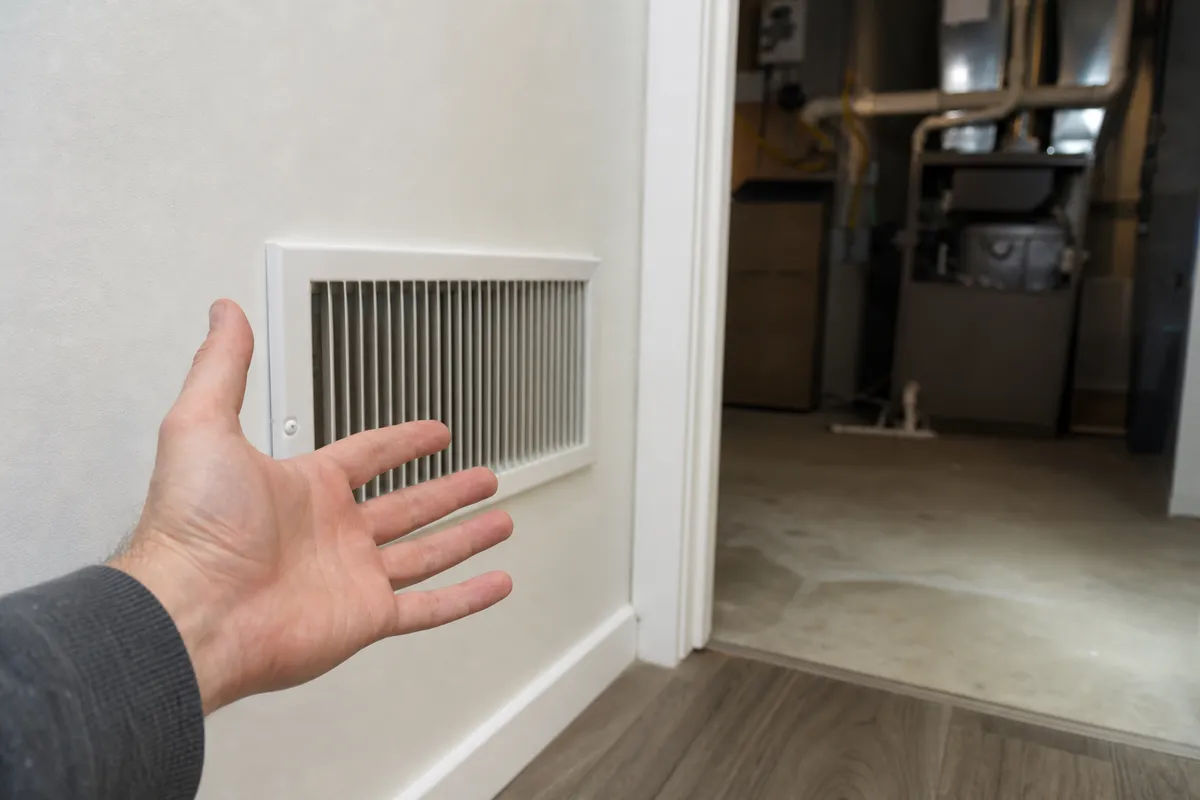
I got a call last January from a homeowner in Lake City. Furnace was on — she could hear the blower, see the display lit up — but cold air was coming out of every vent in the house. She’d already run a space heater for two nights before calling us. Turned out to be a $40 part. I’ve also seen the opposite: customer convinced it was “just the igniter,” and the real problem was a cracked heat exchanger that needed the whole unit replaced.
A furnace that runs but doesn’t heat is one of the most common calls we get in King and Snohomish counties between November and February. The fix ranges from something you can do yourself in five minutes to a job that costs more than a new system. Here’s how to tell which one you’ve got before you call anyone.
TL;DR
- Dirty air filter and closed vents cause more “no heat” calls than actual mechanical failure — check these first, free.
- A weak or failed igniter is the single most common paid repair, usually $150–$350.
- Flame sensor buildup mimics an igniter problem — cleaning it runs $120–$200.
- Cracked heat exchangers, bad control boards, and blower motor failures are the expensive ones — $400 to $1,200+.
- If your furnace is past 15 years old and needs a $1,000+ repair, get a heat pump quote before you pay it — see heat pump installation.
- Anything involving gas smell, soot, or the furnace shutting itself off repeatedly needs a same-day emergency furnace repair call, not a wait-and-see.
Start Here: Check These Before You Call Anyone
I tell every customer this on the phone, even though it costs me a service call sometimes. About 1 in 5 “no heat” calls in Seattle homes are solved by these three things:
- Air filter. A filter clogged with a year of dust chokes airflow so badly the furnace overheats and shuts the burners off as a safety measure, while the blower keeps running cold air. Replace it — $15–$30 at any hardware store.
- Thermostat mode and battery. Sounds obvious, but “Fan: On” instead of “Auto” blows air constantly whether the burners are firing or not. Dead thermostat batteries can also cause erratic behavior.
- Closed supply vents and a dirty outdoor intake. Older homes in neighborhoods like Wallingford or Ravenna sometimes have vents painted shut or blocked by furniture, starving the system.
If you’ve checked all three and you’re still getting cold air, move down this list.
“Run the cheap checks in order: thermostat mode, filter, and the furnace switch that looks like a light switch — someone flips it off in the storage room more often than you’d believe. If the furnace lights and then shuts down within a minute, stop there. Short-cycling on a flame sensor or limit switch is where DIY ends and a service call starts.”
— Danil Sokolov, Heat Pump & Mini-Split Specialist at SPS Pro Services
1. Igniter Failure — $150–$350
The hot surface igniter is a small ceramic component that glows and lights the gas burners. It’s the most failure-prone part in a modern furnace because it heats and cools every cycle, and after 8–12 years it’s brittle. When it fails, the furnace tries to fire, fails the safety check, and shuts the gas valve — but the blower still runs on the thermostat call, pushing room-temperature air through the vents.
You can sometimes see this yourself: pull the front panel (power off first) and watch a heat cycle. No orange glow, no ignition — that’s your answer.
2. Dirty Flame Sensor — $120–$200
This one gets misdiagnosed as an igniter problem all the time. The flame sensor is a thin metal rod that confirms the burner actually lit. Carbon buildup coats the rod after a few years and it stops sensing the flame, so the control board shuts the gas off within seconds of ignition, thinking there’s no fire. Symptom: the furnace tries to start every 90 seconds to 3 minutes, runs briefly, shuts off, repeats. A technician can clean it with a scrap of emery cloth in about 15 minutes — it’s one of the cheaper furnace repairs there is, and I always check it before quoting anything more expensive.
3. Blower Motor or Capacitor Issues — $250–$650
If air is moving but weak, or you hear a hum with no airflow, or the blower runs constantly at low speed, you’re likely looking at a failing motor or the capacitor that starts it. Capacitors are the cheaper half of this range; a full motor replacement, especially on variable-speed systems common in newer Bothell and Sammamish builds, runs toward the higher end.
4. Gas Valve Malfunction — $300–$600
The gas valve controls fuel delivery to the burners. When it sticks or fails electronically, the furnace can run its full cycle — igniter glows, blower spins — but no gas ever reaches the burners, so you get warm plastic smell and cold air, nothing else. This isn’t a DIY repair; gas components need a licensed tech.
5. Cracked Heat Exchanger — $600–$1,200 (or replace the unit)
This is the one I never want to find, and the one homeowners least want to hear about. The heat exchanger is the metal chamber that separates combustion gases from the air blown into your living space. Over 15-20 years, metal fatigue cracks it. A cracked exchanger lets carbon monoxide leak into your ductwork, so most manufacturers and technicians (me included) won’t repair it — we replace it, or recommend replacing the whole furnace if the unit is old enough that the exchanger is original equipment near end of life. If your furnace is past its mid-teens and this comes up, I’ll walk you through heat pump installation pricing alongside a straight furnace swap, because in this region a heat pump often makes more financial sense long-term, especially with current utility rebates through PSE and Snohomish PUD territory.
6. Control Board Failure — $350–$700
The control board is the furnace’s brain — it sequences ignition, blower speed, and safety shutoffs. A failing board can let the blower run on its own schedule while never sending the “fire the burners” signal. Look for a flashing error code on the board itself (visible through a small window on most panels); that code tells a technician exactly what failed before they even open the cabinet, which saves you diagnostic time and money.
7. Ductwork Disconnection or Damage — $200–$900
Especially common in older crawlspace homes around Seattle and Everett where original ductwork is 30-40 years old. If a duct joint has come apart in the crawlspace or attic, the furnace can be producing plenty of heat that never makes it to your vents — it’s dumping into the crawlspace instead. Symptom: one or two rooms are freezing while others are fine, and your gas bill has crept up without explanation.
Cost Comparison Table
| Cause | Typical Cost Range | DIY Possible? |
|---|---|---|
| Dirty filter / closed vents | $15–$30 | Yes |
| Igniter failure | $150–$350 | No |
| Dirty flame sensor | $120–$200 | No (needs disassembly) |
| Blower motor/capacitor | $250–$650 | No |
| Gas valve malfunction | $300–$600 | No |
| Cracked heat exchanger | $600–$1,200+ | No |
| Control board failure | $350–$700 | No |
| Ductwork disconnection | $200–$900 | Partial (visual check only) |
These are estimates based on jobs we’ve run across King and Snohomish counties; exact pricing depends on your furnace’s age, brand, and access.
When Repair Isn’t Worth It
I’ll say this plainly because a lot of contractors won’t: if your furnace is 16+ years old and the repair quote is over $700, get a second number before you approve it — specifically a heat pump installation quote. A heat pump handles both heating and cooling, which matters if you’re also dealing with a failing AC unit (see AC repair if that’s a separate issue). I’ve had customers in Bellevue spend $900 patching a 17-year-old furnace, then call me again eight months later for the next failure. Spending that money toward a new system instead would have covered a chunk of the install.
Practical Checklist Before You Call
- Replace the air filter if it’s been more than 90 days
- Confirm thermostat is set to Auto, not Fan On, and check the batteries
- Check that supply vents throughout the house are open
- Note whether the furnace short-cycles (fires, shuts off, repeats) or runs continuously without heat
- Check the furnace’s age on the manufacturer sticker inside the cabinet
- Smell for gas or notice any soot around the front panel — if yes, shut off the system and call immediately
FAQ
Why is my furnace blowing cold air only sometimes? Intermittent cold air usually points to a flame sensor building up carbon gradually, or a control board that’s failing under specific conditions like a temperature swing. It rarely fixes itself.
Can I use my furnace while waiting for a repair? If it’s short-cycling due to a flame sensor or igniter, it’s generally safe to leave off and use space heaters temporarily. If you smell gas or see soot, don’t run it at all — turn off the switch and call us.
Does this affect my electrical panel or wiring? Occasionally, yes — older panels in homes without updates can struggle to supply consistent power to modern furnace control boards, causing odd behavior. If your panel is original to a pre-1990s home, it’s worth a look; see electrical panel upgrade.
If your furnace is running but not heating, call SPS Pro Services at (206) 427-8907 or book a furnace repair visit and we’ll walk you through it before we ever quote a repair.