
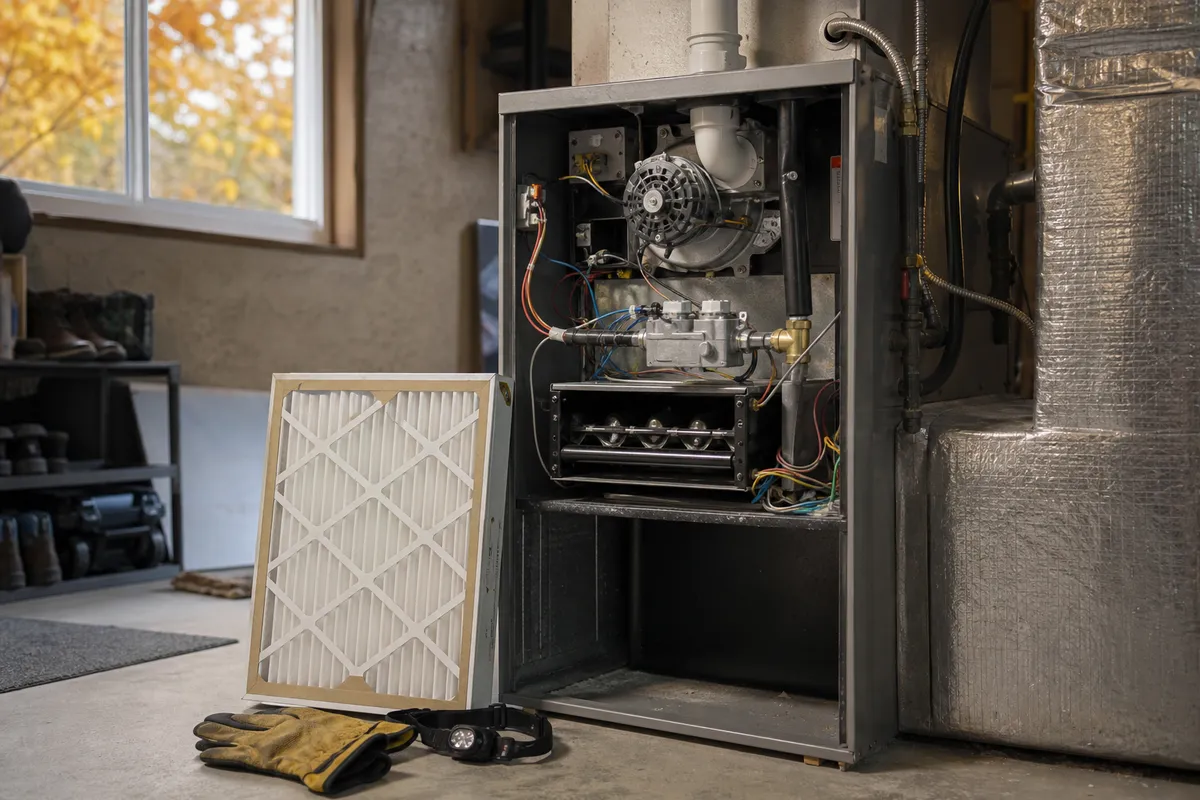
Last October I got a call from a homeowner in Lake City whose furnace died on a Friday night, right when the first real cold front rolled in off the Sound. She’d never had it serviced — bought the house from the previous owner, figured “it’s working, why mess with it.” The heat exchanger had a hairline crack. Furnace replaced, not repaired, $4,800 out of pocket, three days with space heaters. That’s the story behind this checklist. It’s not marketing fluff — it’s the same 12 steps my crew runs on every maintenance call from Everett to Renton, written down so you can either do the basics yourself or know exactly what you’re paying for when you call someone.
TL;DR
- A proper furnace tune-up takes 45-75 minutes and costs most Seattle-area homeowners between $120 and $220.
- Skipping annual maintenance is the number one reason we see mid-winter breakdowns and premature heat exchanger failures.
- Filters, igniters, flame sensors, and blower motors cause about 70% of the no-heat calls we run in January.
- If your furnace is 16+ years old and needs a repair over $700, we’ll usually tell you to price out replacement instead.
- DIY can cover 4 of the 12 points safely; the rest need combustion analysis tools and training.
Why bother before winter instead of after it breaks
Furnaces in this region run maybe 5-6 months a year, hard, then sit idle through our mild summers. That on-off cycling plus our damp climate is exactly what wears out ignition components and corrodes heat exchangers. Homes in older neighborhoods around Seattle and Bellevue’s east side often still have original 1970s-1990s duct systems even after furnace replacements, which adds leakage and dust load nobody accounts for. A fall tune-up catches problems while parts are in stock and technicians aren’t stacked three weeks out, which is exactly what happens by mid-December.
“The single highest-value item on this whole checklist is the filter. Most of the November no-heat calls we run in King and Snohomish counties trace back to a furnace that limit-tripped on a filter nobody changed since spring. It’s a $15 part protecting a $6,000 machine.”
— Danil Sokolov, Heat Pump & Mini-Split Specialist at SPS Pro Services
The 12 points we actually check
Here’s the checklist, in the order we run it on a service call.
- Filter inspection and replacement. A clogged filter is still the single most common cause of furnace shutdowns we see. If yours is gray and matted, that’s restricting airflow and overheating the heat exchanger.
- Thermostat calibration and wiring check. We verify it’s reading temperature accurately and that low-voltage wiring at the furnace board is tight — loose wires cause intermittent “no heat” complaints that look like bigger problems.
- Heat exchanger inspection. We use a camera scope and combustible gas detector to check for cracks. This is the safety-critical one — a cracked exchanger can leak carbon monoxide into your ductwork.
- Burner assembly cleaning. Dust and spider webs (yes, really, especially in crawl-space furnaces around Snohomish County) block burner ports and cause uneven flame patterns.
- Ignition system test. Hot surface igniters and flame sensors degrade over years of heat cycling. We measure resistance rather than just eyeballing the glow.
- Flue and venting check. We confirm proper draft and no blockage — bird nests and debris in exterior vent caps are common on homes near Everett with older sidewall venting.
- Gas pressure and combustion analysis. We test manifold pressure and run a combustion analyzer to check CO output and efficiency. This is the step most DIY checklists skip entirely because it needs calibrated equipment.
- Blower motor and wheel cleaning. A dirty blower wheel can cut airflow by 20-30%, which shows up as your system running longer to reach set temperature.
- Belt and bearing inspection (older furnaces with belt-drive blowers). Squealing on startup usually means this needs attention before it fails outright.
- Ductwork connection check at the furnace. Loose plenum connections leak conditioned air into attics or crawlspaces — we’ve measured 15% loss on some older Bellevue homes.
- Safety control test. Limit switches, rollout switches, and pressure switches all get functionally tested, not simply visually inspected.
- Carbon monoxide detector verification. We check that you actually have working CO detectors near sleeping areas — cheap insurance that a shocking number of homes skip.
Steps 1, 2, and parts of 10 and 12 are reasonable for a homeowner to handle. The rest need training and tools most people don’t have lying around the garage.
What it costs versus what a breakdown costs
| Service | Typical Cost Range | Notes |
|---|---|---|
| Standard furnace tune-up (12-point) | $120 - $220 | Most homes, includes filter |
| Furnace repair (igniter, sensor, control board) | $180 - $650 | Depends on part and furnace age |
| Heat exchanger replacement | $900 - $1,800 | Often not worth it on furnaces 15+ years old |
| Full furnace replacement | $4,200 - $8,500 | Depends on size, efficiency tier, ductwork |
| Emergency no-heat service call (evenings/weekends) | $150 - $300 above standard rate | Avoidable with fall maintenance |
I tell customers straight: if you’re quoted $1,200 to fix a 17-year-old furnace with a cracked exchanger, don’t do it. Put that money toward a new system, or look at whether a heat pump installation makes more sense for your home — heat pumps handle our Puget Sound winters fine down into the 20s and give you cooling in summer too, which a furnace-only setup never will.
Signs you need a repair call now, not a maintenance visit
If you’re seeing any of these, skip the checklist and call for furnace repair directly:
- Short cycling — furnace turns on and off every few minutes
- Yellow or flickering burner flame instead of steady blue
- Burning smell that doesn’t clear after the first 10 minutes of the season’s first run
- Furnace won’t ignite, or ignites then shuts off
- Noticeably higher gas bills with no change in usage habits
A note on electrical panels and furnaces
We run into this more than people expect: homeowners upgrading to a variable-speed furnace or adding a heat pump discover their electrical panel is maxed out, especially in older homes in the 98155 area and similar 1960s-80s neighborhoods. If your panel is still 100-amp and you’re adding HVAC equipment, an electrical panel upgrade is worth pricing out before your install date, not after the crew shows up and can’t hook up the new unit. Same logic applies if you’re planning an EV charger installation down the line — better to size the panel once for both.
While you’re checking systems, don’t forget these
Furnace season overlaps with a few other things worth a look while you’re already in maintenance mode:
- Water heater. Sediment buildup reduces efficiency and lifespan; if yours is making popping noises, that’s a sign — see water heater repair if it’s acting up before winter guests arrive.
- AC system. Yes, in July. If your AC struggled this summer, don’t wait until next June to deal with it — early AC repair scheduling avoids the June-July rush every contractor in King County faces.
Mini-FAQ
How long does a 12-point furnace tune-up actually take? Most single-furnace homes take 45-75 minutes. Larger homes with two systems, or furnaces in tight crawlspace access, run closer to 90 minutes.
Can I just clean the filter myself and skip professional service? You can, and you should change filters every 1-3 months regardless. But filter changes alone don’t catch cracked heat exchangers, drifting gas pressure, or failing safety switches — the things that actually cause CO risks and breakdowns.
My furnace is 14 years old. Tune-up or start planning for replacement? Fourteen years is right in the range where a tune-up still makes sense, but ask your technician for the combustion analysis numbers in writing so you have a baseline. If efficiency has dropped noticeably, start pricing replacement now rather than waiting for a January failure.
Call SPS Pro Services at (206) 427-8907 to get your furnace checked before the first cold snap hits.