
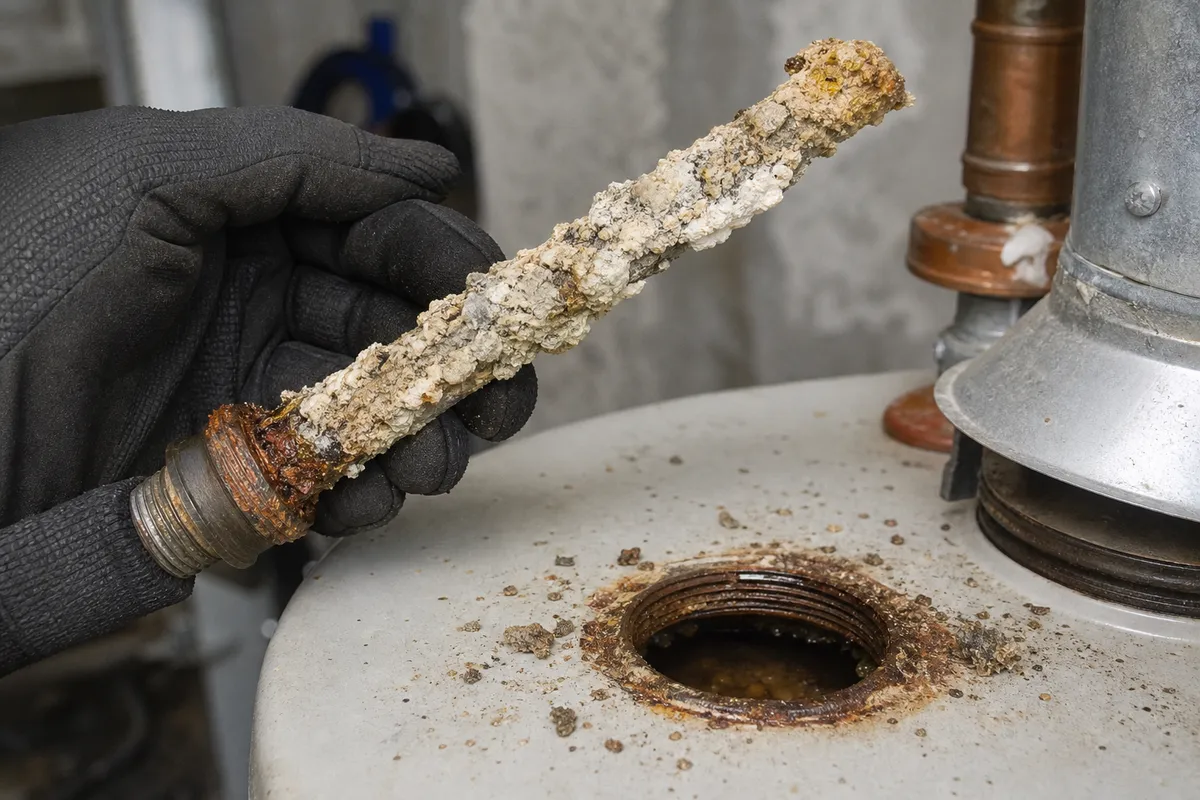
I got a call last month from a guy in Bellevue whose water heater was “working fine” — except the pan under it had two inches of rust-colored water and his floor joists were starting to swell. He’d never looked. Most people don’t, until the shower runs cold or the utility room floods. Water heaters don’t send a warning text. They just quietly age out, and in our climate, that aging happens on a fairly predictable schedule if you know what to look for.
I’ve replaced and repaired water heaters all over King and Snohomish counties since 2017, from 1970s Ballard bungalows with galvanized pipe to new-build townhomes in Lynnwood. The pattern is consistent enough that I can usually tell a homeowner over the phone whether their unit is worth saving before I even see it.
TL;DR
- Standard tank water heaters in our region last 8-12 years; tankless units last 15-20 with maintenance.
- Seattle and Everett’s moderately hard water (7-9 grains per gallon in most areas) speeds up sediment buildup compared to drier climates.
- Rumbling noises, rusty water, a leaking tank, pilot light problems, and rising energy bills are the five signs it’s done.
- If your unit is under 6 years old, repair usually makes sense. Past year 10, replacement almost always wins on cost.
- A basic 40-50 gallon gas tank replacement typically runs $1,800-$3,200 installed in the Seattle area; tankless conversions run higher.
How Long Should a Water Heater Actually Last Here?
Manufacturers print 6, 8, or 12-year warranties on the tank, but warranty length and actual lifespan aren’t the same thing. In our service area, here’s what I see in practice:
Standard tank units (gas or electric): 8-12 years. I’ve pulled 15-year-old tanks that were still limping along, and I’ve replaced 6-year-old ones that failed early because of sediment or a bad anode rod nobody ever checked.
Tankless units: 15-20 years if they get an annual descaling flush. Without maintenance, closer to 10-12, because our water leaves mineral scale on the heat exchanger just like it does in a kettle.
Heat pump water heaters: 10-15 years, similar to standard tanks but with a compressor that can fail independently of the tank itself.
The biggest factor isn’t the brand — it’s water hardness and maintenance history. Seattle Public Utilities water runs moderately hard, and PSE service areas east toward Bellevue and Redmond see similar mineral content. Snohomish County PUD territory, including much of Everett, has comparable hardness from the same regional watersheds. None of it is as hard as, say, Arizona groundwater, but it’s enough that sediment builds up in the bottom of a tank over 8-10 years, insulating the burner from the water and making the unit work harder for less heat.
“Rusty hot water on one side of the house, popping sounds from the tank, moisture around the base — when a caller mentions two of those three, I book the estimate, not the repair. At that point the tank is telling you its plan, and it’s kinder to your floors to replace it on a weekday than to meet it at midnight.”
— Alina Kovalenko, Service Coordinator & Comfort Advisor at SPS Pro Services
The 5 Signs Yours Is Done
1. Rumbling or popping noises. This is sediment hardening at the bottom of the tank and trapping water underneath it, which then boils and pops. It’s not dangerous immediately, but it means efficiency is dropping fast and the tank is aging faster than it should.
2. Rusty or metallic-tasting hot water. If it’s just hot water that’s rusty (cold runs clear), the tank itself is corroding from the inside. Once the tank lining fails, there’s no repair for that — it’s a replacement conversation.
3. Water pooling around the base. A small drip from a fitting can sometimes be tightened or a valve replaced. Water seeping from the tank body itself means the steel has corroded through, and I always tell people not to wait on this one. It goes from a slow weep to a full-on flood, sometimes overnight.
4. Pilot light won’t stay lit, or you smell gas. Sometimes this is a $150 thermocouple fix. Sometimes it’s a sign of a failing gas valve on a 12-year-old unit, and I’m not going to sink $400 into a valve for a tank that’s on borrowed time. Worth a proper diagnostic through water heater repair before deciding either way.
5. Your energy bill crept up with no other explanation. An aging tank with sediment buildup or failing insulation can lose 15-20% efficiency. If your gas or electric bill is climbing and you haven’t added appliances, the water heater is one of the first things I check on a home energy visit.
Repair or Replace: What the Numbers Actually Say
Here’s the table I use in my head on most service calls, based on typical costs I see across Seattle, Bellevue, and Everett jobs.
| Unit Age | Common Issue | Typical Repair Cost | My Recommendation |
|---|---|---|---|
| 0-3 years | Thermocouple, thermostat, minor leak at fitting | $120-$350 | Repair, still under most warranties |
| 4-6 years | Anode rod replacement, sediment flush, heating element | $150-$450 | Repair, good return on investment |
| 7-9 years | Pilot/gas valve issues, minor tank leak | $300-$600 | Repair if healthy otherwise, replace if leak is from tank body |
| 10-12 years | Tank corrosion, major leak, repeated failures | $400-$700 to attempt repair | Replace — you’ll likely be back here in a year |
| 12+ years | Any major failure | N/A | Replace, no question |
For full replacement, most standard 40-50 gallon gas tank jobs in our area land between $1,800 and $3,200 installed, including haul-away of the old unit and code-required updates like expansion tanks or seismic strapping (required in Washington). Tankless conversions typically run $3,800-$6,500 depending on gas line and venting changes. Heat pump water heaters run $2,800-$4,800 installed, and they pair well if you’re already thinking about efficiency upgrades in a home with a heat pump installation system.
A Quick Word on Why Replacement Isn’t Always the Answer
I’ll say this plainly because a lot of contractors won’t: if your water heater is under 5 years old and the issue is a thermocouple, a heating element, or a bad thermostat, do not let anyone sell you a full replacement. Those are $150-$450 fixes on units that have another 5-7 years of useful life. I’ve walked into homes where a previous contractor quoted a full tank swap for what turned out to be a $180 part. That’s not a judgment call, that’s just wrong.
On the flip side, I’ve also had homeowners want to “just fix” a 13-year-old unit with active tank corrosion. I won’t take that job. Once the steel is compromised, you’re paying for a repair that buys you weeks, not years.
Checklist: What to Check Before You Call Anyone
- Check the manufacture date on the metal tag (often a coded date, not written plainly — a technician can read it fast)
- Look at the floor around the base for any moisture, rust stains, or water damage
- Listen for popping or rumbling when the burner kicks on
- Check water color and smell right when the hot tap first runs
- Note your last 2-3 utility bills for any unexplained increase
- Check if there’s a permit or install date on file from a prior contractor
If your unit is showing two or more of these signs and it’s past year 8, it’s worth getting an inspection before it fails on a weekend, which is always the more expensive way to find out.
Other Systems Worth a Look While You’re At It
Water heater age often tracks with the age of other big systems in the house. If your tank is original to a home built before 2010, it’s worth checking your furnace through furnace repair, especially before winter, and if your AC hasn’t been serviced lately, AC repair covers what we typically find on older units. Homes in this age range in Seattle, Bellevue, and Everett also frequently need an electrical panel upgrade if you’re adding a heat pump water heater, EV charger, or other higher-draw equipment — panels from the 1980s and 90s often can’t handle it without an upgrade. If an EV charger install is on your list too, that’s a separate but related conversation worth having through EV charger installation at the same time, since we can often combine the electrical work into one visit.
FAQ
Can I flush my own water heater to extend its life? Yes, and you should, ideally once a year. Shut off power or gas, connect a hose to the drain valve, and run water out until it’s clear. If your unit has never been flushed and it’s over 5 years old, call for a professional flush first — sediment can sometimes clog the drain valve and cause more problems if forced.
Is a tankless water heater worth it for a typical Seattle-area home? It depends on household size and how long you plan to stay in the home. Tankless units cost more upfront but last longer and use less energy over time. For a family of 4+ with high hot water demand, the math usually works out within 8-10 years. For a smaller household, a standard tank is often the more practical choice.
Do I need a permit to replace a water heater in Washington? Yes. Water heater replacement requires a permit in most King and Snohomish County jurisdictions, and inspectors check for seismic strapping and proper expansion tank installation. Any contractor doing the work should be pulling that permit for you.
If your water heater is showing any of these signs, or you just want a straight answer on repair versus replacement, call SPS Pro Services at (206) 427-8907.