
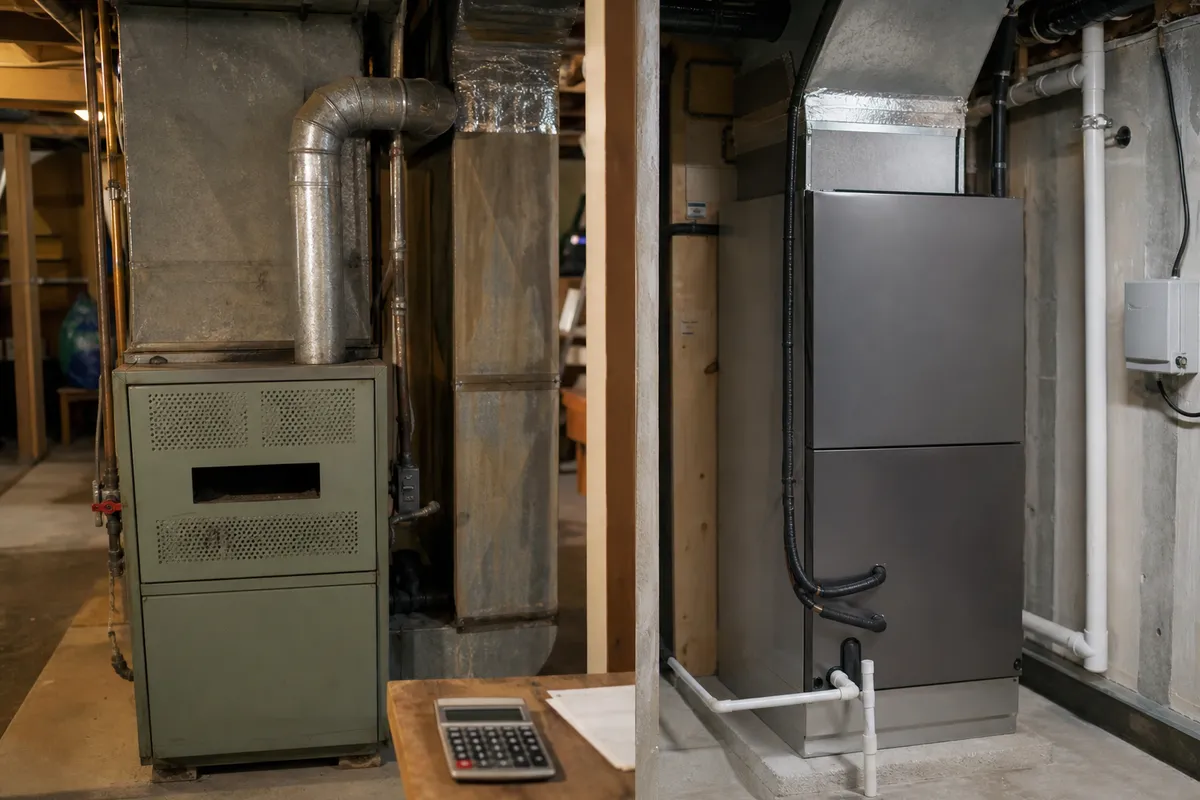
Every winter I get the same call: “My furnace just died, should I replace it with the same thing or switch to a heat pump?” The honest answer depends on your electricity rate, your gas rate, and how old your ductwork is. Let’s run the actual numbers instead of guessing.
TL;DR
- A cold-climate heat pump running on PSE electricity typically costs $0.09–$0.14 per mile of heat delivered in Seattle’s mild winters, once you account for coefficient of performance (COP).
- A gas furnace at current PSE natural gas rates runs closer to $0.11–$0.16 per equivalent unit of heat, but efficiency drops on the coldest nights.
- Heat pumps also give you air conditioning for free in summer — no separate AC system needed.
- Installed cost for a heat pump system usually lands between $6,500 and $14,000; a comparable high-efficiency furnace installation runs $4,000–$8,500.
- Homes with electrical panels under 100 amps often need a panel upgrade before a heat pump conversion — factor that into your budget.
- Seattle’s winter design temperature (around 23°F) is well within the operating range of modern cold-climate heat pumps like the Mitsubishi Hyper-Heat or Bosch IDS Ultra.
Why This Question Comes Up So Often in Seattle
King and Snohomish counties sit in a marine climate — wet, mild winters with lows that rarely drop below the low 20s, and summers that now regularly push into the 80s and 90s. That combination is exactly why heat pumps make more financial sense here than they do in Spokane or Minneapolis. You’re not fighting sub-zero temperatures for weeks at a time, so a heat pump’s efficiency curve stays favorable almost all season.
Most of the housing stock I work on in Seattle, Bellevue, and Everett was built between the 1960s and 1990s, which means original ductwork, older gas furnaces nearing the end of their 15–20 year lifespan, and electrical panels that were sized for a smaller home before AC, EVs, and induction ranges became common. All of that affects which option actually saves you money.
“Compare total cost of ownership, not sticker price. A heat pump costs more up front than a like-for-like furnace swap, but it replaces the AC too, qualifies for incentives a furnace doesn’t, and in our climate runs at two to three times the delivered efficiency. Over a 15-year life the math usually favors the heat pump — just not always, which is why we run both numbers for the client.”
— Sergei Petrov, Founder & Lead HVAC Technician at SPS Pro Services
The Math: kWh vs Therms
Here’s how I actually run the comparison for a client. PSE residential electricity in our service area runs roughly $0.11–$0.13 per kWh depending on your rate schedule and time of year; Snohomish PUD customers typically see $0.10–$0.11 per kWh, which is one of the more favorable rates in the state. Natural gas from PSE runs around $1.10–$1.40 per therm depending on season.
A cold-climate heat pump delivers a COP of about 2.5 to 3.5 across most of a Seattle winter — meaning for every 1 kWh of electricity you put in, you get 2.5 to 3.5 kWh of heat out. A gas furnace, even a 96% AFUE unit, converts fuel to heat at roughly a 1:1 ratio (minus that 4% loss).
Run the conversion (1 therm = 29.3 kWh of heat energy) and you get this rough per-home comparison for a typical 1,800–2,200 sq ft house:
| Factor | Cold-Climate Heat Pump | 96% AFUE Gas Furnace |
|---|---|---|
| Typical installed cost | $6,500–$14,000 | $4,000–$8,500 |
| Estimated monthly heating cost (winter, PSE electric) | $95–$145 | $110–$170 |
| Estimated monthly heating cost (winter, SnoPUD electric) | $80–$125 | $110–$170 |
| Cooling included | Yes, no separate AC needed | No, needs a separate AC or heat pump add-on |
| Expected lifespan | 12–15 years | 15–20 years |
| Panel upgrade sometimes required | Yes, if under 100A | Rarely |
| Backup heat strip cost impact (below 20°F) | Adds $10–$25/month on coldest weeks | N/A |
These are estimates based on typical Seattle-area homes and current utility rates — your actual bill depends on insulation, thermostat habits, and duct condition. I always recommend pulling your last 12 months of PSE or SnoPUD bills before committing either way.
When a Furnace Still Makes Sense
I install heat pumps for a living and I’ll still tell a homeowner to stick with gas sometimes. If your existing furnace is under 10 years old and working fine, replacing it early rarely pencils out. If you’re on PSE gas with a genuinely low locked-in rate and your electric panel is maxed out with an EV charger and an electric range already, a furnace repair or a like-for-like replacement may be the more practical move for now. Gas furnaces also still edge out heat pumps on raw output during a hard cold snap, though Seattle rarely sees that scenario for more than a few days a year.
When a Heat Pump Wins
For most homes without gas service already piped in, or where the furnace is 15+ years old and due for replacement anyway, a heat pump conversion usually wins on total cost of ownership within 5–8 years. You eliminate a second AC purchase, you drop your carbon footprint, and you stop paying a monthly gas customer charge just to keep the pilot infrastructure alive. If you’re already collecting heat pump installation quotes, ask the contractor to size the unit using a Manual J load calculation, not a rule-of-thumb tonnage guess — oversizing is the single biggest reason people report disappointing bills.
The Panel Question Nobody Asks Until It’s Too Late
This is the part homeowners in older Seattle bungalows and Everett rowhouses miss. A cold-climate heat pump with backup electric strip heat can draw 30–60 amps on its own circuit. If your panel is a 100-amp original from the 1970s and you’re already running an electric water heater or thinking about an EV charger, you may need an electrical panel upgrade before the HVAC install can even happen. I’ve had jobs delayed two weeks because nobody checked panel capacity first. Get an electrician to check your panel before you get a heat pump quote, not after.
A Practical Checklist Before You Decide
- Pull your last 12 months of utility bills from PSE or Snohomish PUD and note your actual per-kWh and per-therm rates.
- Check your electrical panel amperage — 100A panels often need review, 200A panels usually have headroom.
- Get your ductwork inspected; leaky or undersized ducts will hurt a heat pump’s efficiency more than a furnace’s.
- Ask for a Manual J load calculation, not a size-for-size swap quote.
- Compare installed quotes side by side, including any rebates from PSE, SnoPUD, or the Washington State Clean Energy Fund.
- If EV charger installation is on your list for the same year, bundle the panel evaluation into one visit to save on labor.
- Ask whether the quote includes a cooling coil or reversing valve — some “heat pump” quotes are actually AC-only units with electric backup heat, which changes the math significantly.
Don’t Forget the Rest of the System
A heating decision doesn’t happen in isolation. If your home already has central air and you’re only comparing heating costs, a straight furnace-to-heat-pump swap might not even touch your AC unit — worth checking with an AC repair visit before you assume you need a full replacement. And if your water heater is also aging out, a heat pump water heater is often a smart companion upgrade to bundle with the project rather than calling separately for water heater repair down the road.
I work jobs across Seattle, Bellevue, and Everett, and the rate math is genuinely different on PSE versus Snohomish PUD, so don’t assume your neighbor’s bill numbers apply to your house.
Mini-FAQ
Will a heat pump keep my house warm on the coldest night of the year in Seattle? Yes. Seattle’s design temperature is around 23°F, and cold-climate heat pumps like the Mitsubishi Hyper-Heat line maintain rated capacity down to 5°F or lower. Backup electric heat strips cover the rare extreme cold snap.
Do I still need a furnace if I get a heat pump? No, most cold-climate heat pump systems replace the furnace entirely, using electric resistance backup instead of gas for those rare very cold hours. Some homeowners choose a dual-fuel setup that keeps the furnace as backup, which can make sense if you already have a newer gas unit.
How long does a typical heat pump conversion take? Most single-family home installs take one to two days for the equipment swap, plus an additional day if a panel upgrade or ductwork modification is needed first.
Call (206) 427-8907 to get a Manual J load calculation and a real number for your specific home, not a generic estimate.