
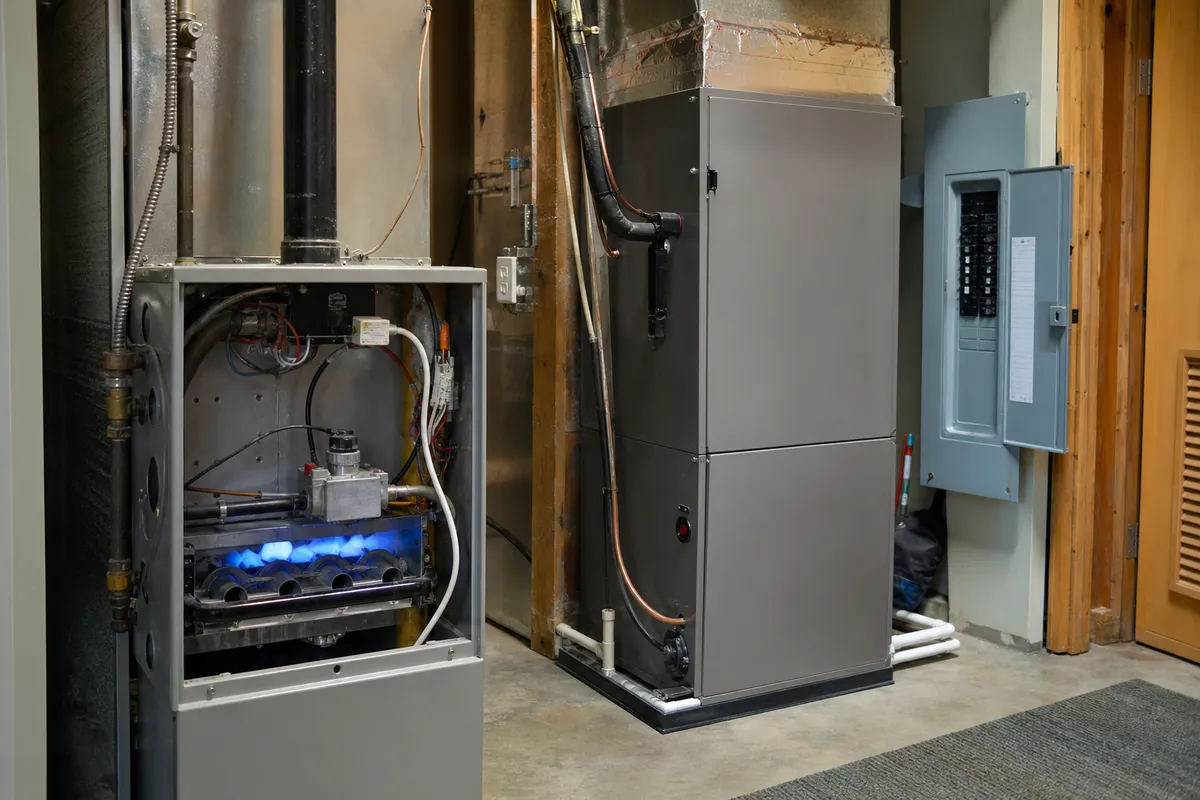
A couple in Renton called me this spring with a dead 22-year-old gas furnace and a question I hear more every year: “Should we even stay with gas?” Their neighbor had gone all-electric. Their utility bill made gas look cheap. Their daughter was pushing them toward anything without a flue. And the two quotes they’d already collected each just pitched whatever that contractor preferred to install.
We spent forty minutes at their kitchen table doing the actual math: therms per winter from PSE bills, electrical panel capacity, ductwork, how long they planned to stay in the house. The answer for them turned out to be a heat pump, which neither of the other quotes had even mentioned. But I’ve done the same session and landed on a 95% gas furnace, and once or twice on a plain electric furnace. The right answer depends on numbers you already have in a drawer somewhere. This is the comparison I walk through on those calls, written down, including the twist most national articles miss.
TL;DR
- AFUE is the fraction of fuel that becomes heat in your house: 80% furnaces waste roughly 1 in 5 therms up the flue, 95%+ condensing units waste about 1 in 20.
- Electric furnaces are 100% efficient at the unit but electricity costs more per unit of heat than gas in PSE territory, so gas usually wins on operating cost.
- Installed cost: gas furnace $4,800-$9,800; electric furnace is cheaper to buy but often needs panel work.
- Washington policy is steadily pushing electrification, which matters if you plan to own the home 15+ years.
- The honest twist: for most all-electric decisions here, a heat pump beats an electric furnace on operating cost by a wide margin.
What does AFUE actually tell you?
AFUE (Annual Fuel Utilization Efficiency) is the percentage of the fuel’s energy that ends up as heat inside your home over a season. An 80% AFUE furnace sends about 20 cents of every gas dollar out the flue. A 95%+ condensing furnace captures most of that by running the exhaust through a second heat exchanger until the water vapor in it condenses, which is why those units drain condensate and vent through PVC instead of metal.
Two practical notes from the field. First, the ENERGY STAR furnace listings are a decent shortlist, but the AFUE on the box only holds if the furnace is sized and installed correctly; an oversized 96% furnace that short-cycles will underperform a well-installed 80% unit. Second, condensing furnaces change the venting rules, often the hidden cost in an upgrade quote.
Electric furnaces don’t play this game: essentially every watt becomes heat, so they’re effectively 100% efficient at the unit. That sounds like a win until you look at what a watt costs.
Which is cheaper to run in PSE territory?
Here’s the core math. Natural gas from PSE is priced per therm; electricity per kilowatt-hour. One therm equals about 29.3 kWh of heat energy. Even after you discount gas by AFUE losses, a therm of delivered heat from a 95% furnace has consistently cost meaningfully less than the same heat made from resistance electricity at Puget Sound-area rates. Rates move, so run your own bills, but the gap between gas and electric-resistance heat has been wide for years, and it favors gas.
That’s resistance heat, though. A heat pump doesn’t make heat from electricity, it moves heat from outside air, delivering roughly 2.5-3.5 units of heat per unit of electricity in our mild climate. That multiplier is what makes electric heat competitive with gas here, and it’s why the ENERGY STAR heat pump category is where most of the region’s incentives point. Current PSE and Snohomish PUD offers, plus the federal 25C tax credit, generally reward heat pumps far more than any furnace.
Washington’s policy direction is worth a sentence: state codes and utility programs keep nudging new construction and major retrofits toward electrification. I won’t predict specific rules, but if you plan to be in the house past 2040, that trend belongs in your decision.
What do the numbers look like side by side?
Installed pricing and characteristics from our recent jobs across King and Snohomish counties:
| Factor | 80% gas furnace | 95%+ gas furnace | Electric furnace | Heat pump |
|---|---|---|---|---|
| Installed cost | $4,800 - $6,500 | $6,000 - $9,800 | $3,500 - $6,000 | $6,500 - $15,500 |
| Efficiency | 80% AFUE | 95-98% AFUE | 100% at unit | 250-350% effective |
| Venting | Metal flue/chimney | PVC through sidewall + condensate drain | None | None |
| Typical lifespan | 15-20 yrs | 15-20 yrs | 20-30 yrs | 12-15 yrs |
| Operating cost, typical PNW winter | Moderate | Lowest of the gas options | Highest on this list | Lowest overall |
| Rebates/credits | Rare | Limited | Rare | Strongest (PSE/PUD + 25C) |
The venting line deserves attention. Swapping an 80% furnace for a 95% unit means abandoning the old metal flue and running new PVC intake and exhaust through a sidewall, plus a condensate drain. In most houses that’s routine. In some Bellevue and Seattle homes with the furnace buried mid-basement far from an exterior wall, the venting run is the difference between the low and high end of that install range. Also, if a water heater shared the old flue, the flue may need a liner once the furnace leaves it. A good furnace installation quote addresses all of this in writing; be suspicious of one that doesn’t.
When does an electric furnace actually make sense?
Rarely, but not never. The honest niche cases I’ve installed them for:
- No gas service on the street, and the cost to trench a gas line is absurd.
- A backup or auxiliary heat source paired with a heat pump, where the electric furnace is the air handler with strip heat that runs only on the coldest mornings.
- Small, well-insulated homes, condos, and ADUs where total heating load is tiny and install budget matters more than operating cost.
- Landlords prioritizing the 20-30 year lifespan and near-zero maintenance over the tenant’s utility bill (I say that neutrally; it’s a real calculation).
One catch that surprises people: a whole-home electric furnace draws serious amperage, often 60-100 amps of capacity. Older homes around Everett with 100-amp panels usually can’t take that without an electrical panel upgrade first, which belongs in your budget from day one, not as a surprise on install day.
“Half the gas-to-electric conversions I get called into stall at the panel. My advice: have the panel evaluated before you sign any equipment quote. Knowing you have 40 spare amps, or zero, changes which systems are even on the table.”
— Marcus Reed, Senior Electrician at SPS Pro Services
How do I actually decide? A worksheet
Sit down with your last two winters of utility bills and go through this list:
- Pull your PSE bills and note therms used per winter month. High usage strengthens the case for a 95% furnace or a heat pump; low usage weakens the payback for premium efficiency.
- Check your electrical panel rating (main breaker label). Under 200 amps, get an electrician’s opinion before considering any electric option.
- Note your furnace’s location. Near an exterior wall favors a condensing furnace; buried locations add venting cost.
- Decide your ownership horizon. Under 7 years favors cheaper install; over 10 favors lower operating cost and electrification.
- Ask whether you want air conditioning. If yes, stop comparing furnaces and read heat pump vs. furnace first, because one machine can do both jobs.
- Check current incentives: PSE rebates, Snohomish PUD offers, and the federal 25C credit. Apply them to your comparison, not to the sticker prices.
- Get quotes that state AFUE, sizing calculation method, venting plan, and electrical scope. Missing items are how “cheap” quotes grow later.
If your existing furnace still has life in it, keep it alive with regular furnace maintenance while you decide on your own schedule. Panic replacements in January are where bad deals happen.
Frequently asked questions
Is an 80% furnace still legal to install here?
As of this writing we still install 80% AFUE furnaces where venting or budget constraints call for them, but efficiency standards keep tightening and the long-term direction is clear. If you’re buying a furnace you expect to run into the 2040s, I’d go condensing or electric-based for that reason alone.
My gas furnace died and it’s January. Do I have time for this analysis?
Mostly yes. The panel check and the gas-bill math take one evening, and space heaters can bridge a day or two. Rushing a 20-year decision to save 48 hours is a bad trade. Our furnace replacement quotes lay out both paths so you decide once, with numbers.
Are electric furnaces safer than gas?
They remove combustion from the house, so no flue gases and no carbon monoxide from the furnace itself, which is a genuine benefit. Gas furnaces that are properly installed and inspected annually are also very safe. I’d call it a tiebreaker, not a deciding factor, for a well-maintained system.
Sources
- ENERGY STAR — Furnaces
- ENERGY STAR — Air-Source Heat Pumps
- IRS — Energy Efficient Home Improvement Credit (25C)
Want the kitchen-table version with your actual bills? Call SPS Pro Services at (206) 427-8907 or start with a heat pump installation consult and we’ll compare all three options honestly.