
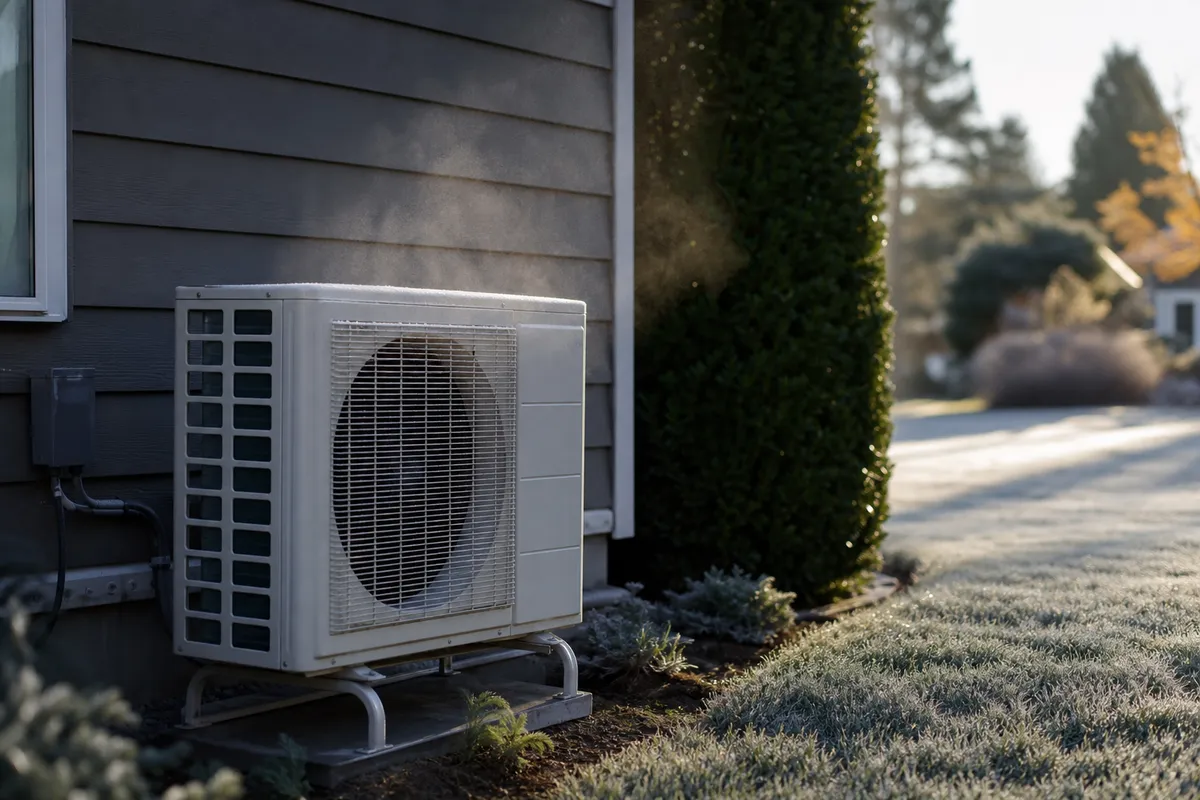
Your furnace kicks on, burns gas, and pushes hot air through ducts. A heat pump does something stranger: it moves heat that’s already outside — even in 40-degree drizzle — into your house. Then in August, it runs the same cycle backward and pulls heat out. One box, two jobs, and for most of the year in Seattle, it costs less to run than what you have now. Let’s get into the actual numbers, not simply the marketing pitch.
TL;DR
- A heat pump moves heat rather than burning fuel to create it, which is why it can hit 200-300% efficiency compared to a furnace’s 80-98%.
- Seattle’s mild winters (rarely below 25°F) are close to ideal heat pump territory — cold-climate models keep working efficiently even lower.
- Most ducted heat pump installs in King and Snohomish counties land between $9,000 and $17,000; ductless mini-split systems run $4,500 to $13,000 depending on zones.
- PSE customers typically see the biggest savings switching from oil or propane furnaces; savings versus a newer gas furnace are smaller but still real once you factor in AC replacement costs.
- Older homes in Seattle, Everett, and parts of Bellevue often need an electrical panel check before installation — this is the step people skip and regret.
How a Heat Pump Actually Works
A heat pump uses a refrigerant cycle — the same physics behind your fridge — to extract heat from outside air and concentrate it indoors. In summer, it reverses direction and works exactly like an air conditioner. That’s the whole trick: it’s a two-way appliance, which is why a heat pump replaces both your furnace and your air conditioning in one purchase.
Efficiency is measured differently than gas equipment. A furnace burns fuel with maybe 95% efficiency — you get back 95% of the energy in the fuel. A heat pump doesn’t create heat from fuel; it relocates it, so its “efficiency” (Coefficient of Performance, or COP) is often 3.0 to 4.0, meaning you get 3 to 4 units of heat for every unit of electricity you put in. That ratio is where the dollar savings come from on your PSE or Snohomish PUD bill.
“I’ve installed heating systems here since 2017, and the shift in the last few years is real: cold-climate heat pumps handle our winters without breaking a sweat. The clients who are happiest are the ones who sized the system honestly and checked their electrical panel before install day — those two steps decide the whole experience.”
— Sergei Petrov, Founder & Lead HVAC Technician at SPS Pro Services
Does a Heat Pump Actually Work in Seattle Weather?
Yes, and this is the part people get wrong from watching outdated ads. Seattle’s climate zone rarely sees sustained temperatures below 25-30°F. Modern cold-climate heat pumps (Mitsubishi Hyper-Heat, Daikin Aurora, Fujitsu XLTH) maintain rated output down to 5°F and keep operating well below 0°F. Seattle’s average January low is around 37°F. We are not fighting Minnesota winters here — we’re fighting damp, mild cold, which is exactly the environment heat pumps were engineered for in places like Japan and coastal Norway.
The systems that struggle are older, budget-tier heat pumps from the 1990s and early 2000s, which lost real capacity below 35°F. If your home already has one of those, an upgrade alone can cut your heating bill noticeably.
Ducted vs. Ductless: Which One Fits Your House
This decision matters more than which brand you pick.
Central ducted heat pump — replaces your furnace and AC, uses your existing ductwork. Best if your ducts are in good shape and properly sized. Common in Bellevue and Everett homes built after 1975 with forced-air systems already in place.
Ductless mini-split — no ductwork required, one outdoor condenser feeds one or more wall-mounted indoor heads. This is often the better fit for older Seattle homes (built 1900-1950) with radiators, wall heaters, or undersized ducts. You can zone rooms individually, which also means you stop heating rooms nobody uses.
Hybrid/dual-fuel — pairs a heat pump with your existing furnace as backup for extreme cold snaps. Makes sense if you already have a newer furnace and just want AC plus better winter economy without ripping anything out.
Real Cost Numbers for King and Snohomish Counties
Every home is different, but here’s what most jobs land between, based on system type and home size:
| System Type | Typical Install Cost | Best For |
|---|---|---|
| Single-zone ductless mini-split | $4,500 – $7,000 | One room, ADU, or garage conversion |
| Multi-zone ductless (3-4 heads) | $9,000 – $13,000 | Whole home without existing ductwork |
| Central ducted heat pump | $9,000 – $17,000 | Homes with existing, functional ductwork |
| Cold-climate upgrade (existing ducted) | $8,000 – $14,000 | Replacing an aging heat pump or AC/furnace pair |
These are estimates only — exact pricing depends on home size, existing electrical capacity, and duct condition. A technician doing a heat pump installation quote should always walk your attic or crawlspace before giving you a number, not only measure square footage from the driveway.
The Electrical Question Nobody Asks Up Front
Heat pumps run on electricity, and many older panels — especially in Seattle homes built before 1970 — were sized for lights and a stove, not a 240V heating and cooling system plus everything else modern households run. If your panel is still 100A and you’re also thinking about an EV, an electrical panel upgrade is worth pricing out at the same time as the heat pump, because doing both in one visit saves a second round of permits and inspection fees. This comes up constantly in older Wallingford, Ballard, and Everett houses.
If you’re planning an EV charger installation down the road too, this is the moment to size the panel once for both loads instead of twice.
What About My Furnace and Water Heater?
You don’t have to replace everything at once. Plenty of homeowners keep their gas furnace as backup heat during the coldest week of the year and let the heat pump handle 90%+ of the season — that’s the hybrid setup mentioned above. If your furnace is on its last legs anyway, get a second opinion before spending money on furnace repair for a unit that’s close to replacement age.
Heat pump water heaters are a separate but related upgrade — they use the same refrigerant-cycle trick to heat water 2-3 times more efficiently than a standard electric tank. If your current unit is already having issues, it’s worth asking about heat pump water heaters during a water heater repair call rather than just patching the old tank.
Pre-Install Checklist
- Get your current PSE or Snohomish PUD bill for the last 12 months — this is the baseline for real savings math, not guesswork.
- Have your panel size checked (100A vs 200A) before assuming the quote is final.
- Decide ducted vs. ductless based on whether your existing ductwork is sealed and sized correctly, not simply cost.
- Ask specifically about cold-climate rated equipment (Hyper-Heat, XLTH, Aurora tier), not the base residential line.
- Check for Washington state and utility rebates — PSE and Snohomish PUD both run heat pump incentive programs that shift year to year.
- Confirm whether backup heat strips or a hybrid furnace pairing makes sense for your specific home.
Mini-FAQ
Will a heat pump raise my electric bill even if my heating bill drops? Usually yes on the electric side and no on your total home energy cost, especially if you’re switching off oil, propane, or electric resistance heat. If you’re coming from an efficient gas furnace, the swing is smaller but you also gain AC, which many older Seattle homes don’t currently have at all.
Do I need to replace my ductwork too? Not always. If your ducts are properly sealed and sized for the tonnage you need, they can usually be reused. Leaky or undersized ducts are worth fixing regardless of what’s on the other end of them.
How long does installation actually take? A single-zone ductless system is often a one-day job. Multi-zone or central ducted systems, especially ones paired with a panel upgrade, typically run two to four days depending on home access and inspection scheduling.
In Seattle, Bellevue, Everett or anywhere between, call (206) 427-8907 and we’ll walk your home before quoting anything.