
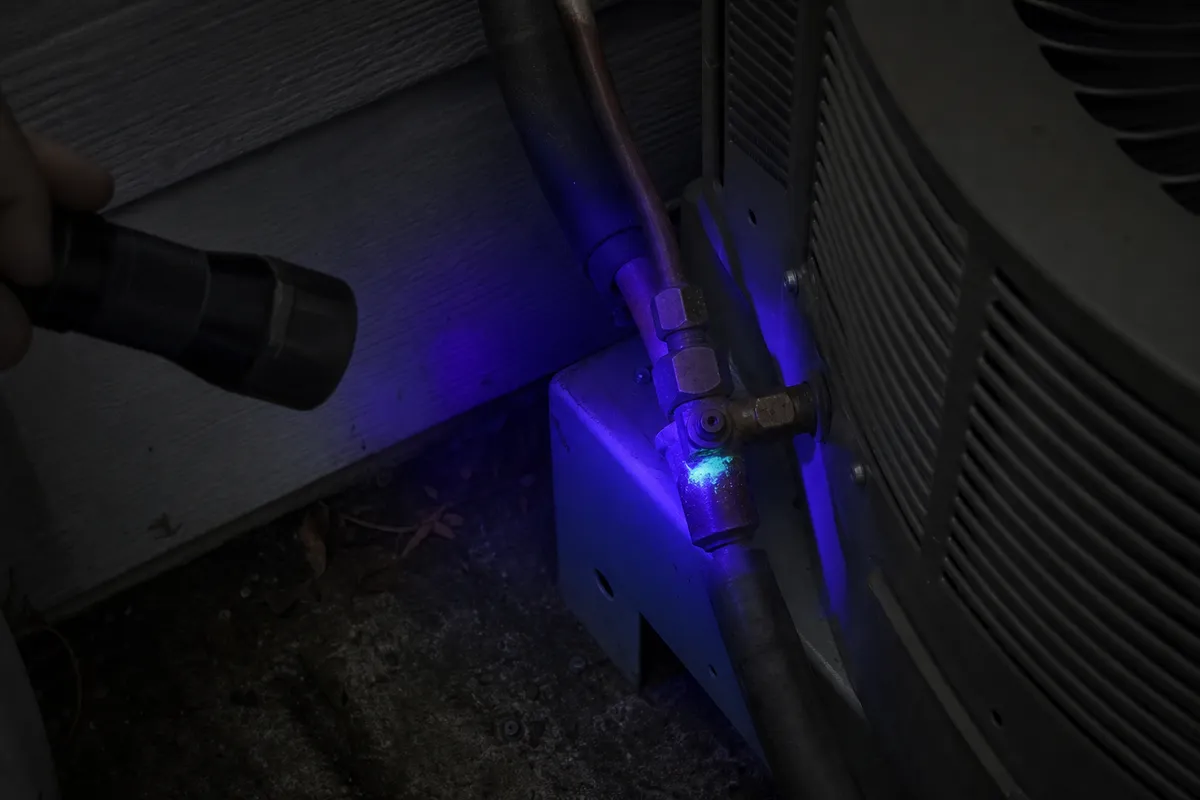
I got a call last July from a homeowner in Shoreline who said her heat pump was “just not keeping up” during a heat wave. Indoor temp was stuck at 78 no matter what she set the thermostat to. Ten minutes with gauges on the outdoor unit told the story: refrigerant charge was down almost 30 percent. A slow leak at a flare fitting had been bleeding her system for probably two years. She’d been paying PSE for cooling that barely worked.
Refrigerant leaks are sneaky. Your system doesn’t just shut off — it limps along, using more electricity to deliver less comfort. Here’s how to catch one before it costs you a compressor.
TL;DR
- Warm or lukewarm air from vents when the thermostat calls for cool is the most common leak symptom
- Ice forming on the outdoor unit’s copper lines, even in 70-degree weather, almost always points to low refrigerant
- A hissing or bubbling sound near the indoor coil or outdoor lineset means refrigerant is escaping right now
- Rising kWh usage on your PSE or Snohomish PUD bill with no change in habits is a quiet red flag
- Refrigerant is never a “top it off and forget it” fix — leaks have to be found and sealed, or you’re just paying to refill a hole
- Most leak diagnosis and minor repair jobs in the Seattle area run $250 to $900; full recharges and larger repairs run higher
Why Refrigerant Leaks Matter More Than People Think
Refrigerant doesn’t get “used up” like gas in a car. A correctly charged system holds the same charge for its entire 12-to-18-year life. If your unit is low, refrigerant went somewhere — a pinhole in the coil, a loose flare nut, a rubbed-through line where it passes through a wall. There’s no such thing as “just needs a little more freon” without a leak behind it.
Low charge forces the compressor to work harder to move heat, in August cooling season and in January heat-pump season alike. I’ve measured systems pulling 15 to 25 percent more amperage than nameplate rating just because they’re short half a pound of R-410A. That shows up directly on your electric bill, and eventually it shows up as a burned-out compressor, which is a $2,000-plus repair instead of a $300 one.
“Refrigerant is a sealed loop — it doesn’t get used up. So when a unit is low, there’s a hole, and the yearly top-off ritual is just renting time on a failing system. Find-and-fix costs more upfront than a recharge, and it’s still the cheaper path over any two summers I’ve ever priced.”
— Sergei Petrov, Founder & Lead HVAC Technician at SPS Pro Services
The Signs You Can Actually Notice From Inside the House
You don’t need gauges to catch most of these early.
Warm air from the supply vents. If your AC or heat pump runs constantly but the air coming out feels barely cool, or actually warm on a heat pump in winter, that’s the number one complaint I hear before finding a leak.
Longer run times, shorter cycles that never satisfy the thermostat. A healthy system in a typical Bellevue or Kirkland home cools a 1,800 square foot house in 20 to 30 minutes and shuts off. A low-charge system runs for hours and still doesn’t hit the setpoint.
Rising electric bills with no lifestyle change. If you’re not adding an EV charger or new appliances and your PSE bill still climbs 20 percent month over month during cooling season, refrigerant charge is one of the first things I check, right alongside dirty coils and a failing capacitor.
Ice on the outdoor unit or on the indoor coil. This is the big one. Low refrigerant drops the pressure and temperature inside the coil below freezing, even when it’s 65 degrees outside. If you see frost or solid ice on copper lines, shut the system off before ice damages the compressor, and call for ac repair.
Hissing, bubbling, or gurgling sounds near the indoor air handler or along the outdoor lineset. Refrigerant escaping through a small hole makes a distinct hiss. A bubbling sound at a valve usually means the leak is bigger.
Higher humidity indoors during cooling season. A properly charged system pulls moisture out of the air as a side effect of cooling. Low charge means less dehumidification, so your house feels clammy even at the right temperature.
What Causes Refrigerant Leaks in Pacific Northwest Homes
Our housing stock plays a role here. A lot of homes in Seattle, Everett, and the surrounding suburbs were built between the 1950s and 1980s, long before heat pumps were standard equipment. When contractors retrofit these houses, they’re often running new linesets through old wall cavities, tight attics, and crawlspaces, and that means more fittings, more bends, and more chances for a joint to weep over time.
Common leak points I find on service calls:
- Flare fittings at the outdoor unit that were never torqued to spec
- Factory joints on the indoor coil, especially on units over 10 years old
- Rubbed-through copper where the lineset passes through a wall sleeve or under a house
- Schrader valve cores that lose their seal after repeated service visits
- Corrosion on outdoor coils near the coast, where salt air accelerates pinhole leaks
Refrigerant Repair Costs in the Seattle Area
Here’s what homeowners in King and Snohomish counties are typically looking at. These are estimates, not quotes — actual cost depends on leak location, refrigerant type, and system age.
| Service | Typical Cost Estimate | Notes |
|---|---|---|
| Leak detection (dye test or electronic sniffer) | $150 – $350 | Often waived if you proceed with repair |
| Minor fitting or valve repair | $200 – $600 | Flare nuts, Schrader valves, accessible joints |
| Coil leak repair or coil replacement | $800 – $2,200 | Depends on whether coil is repairable or needs swap |
| Full refrigerant recharge (R-410A) | $300 – $900 | Priced per pound; larger systems cost more |
| Lineset replacement (buried or in-wall) | $600 – $1,800 | Labor-heavy if lines run under a slab |
| System replacement instead of repeated repairs | $4,500 – $9,500 | Common call once a unit is past 12 years old with recurring leaks |
If your system needs recharging more than once every couple of years, you’re not fixing the problem, you’re renting refrigerant. At that point it usually makes more financial sense to look at heat pump installation instead of chasing leaks on an aging unit.
A Quick Self-Check Before You Call
- Look at the outdoor unit. Any frost, ice, or oily residue on the copper lines or fittings?
- Put your hand at a supply vent. Is the air noticeably cool (heat pump cooling mode should be 15-20 degrees below room temp)?
- Listen near the indoor air handler for hissing when the system first kicks on
- Check your last three PSE or Snohomish PUD bills for unexplained increases
- Note how long the system runs per cycle — anything over 45 minutes without hitting setpoint is worth a call
When It’s More Than Just Refrigerant
Sometimes what looks like a leak is actually a wiring or electrical issue feeding false symptoms — a failing contactor can mimic short cycling, and an undersized breaker can trip before the compressor even gets going. If your home’s panel is older or already maxed out, especially in houses in Seattle and Everett built before 200-amp service was standard, it’s worth having someone check the electrical panel at the same visit. I’ve seen homeowners chase a “cooling problem” for a season that was actually a voltage drop issue. And if you’re planning to add a heat pump water heater or an EV charger down the line, that’s the right time to size the panel correctly instead of doing it twice.
Also worth ruling out: a failing furnace blower can reduce airflow across the coil enough to cause icing that looks exactly like a refrigerant issue. If your system is a heat pump paired with a gas furnace for backup heat, get the furnace checked too before assuming it’s refrigerant. Same logic applies to homes in Bellevue with older heat pump systems that haven’t had a full airflow check in years.
Mini-FAQ
Can I just add refrigerant myself from a hardware store canister? No. R-410A systems require licensed handling under EPA rules, and topping off without finding the leak just delays a bigger repair while you keep losing charge.
How much refrigerant loss is “normal” per year? None, for a sealed system. Any measurable loss means there’s a leak somewhere. A well-installed system holds its factory charge for its entire service life.
Will low refrigerant damage my compressor permanently? Yes, if it runs low for an extended period. The compressor relies on refrigerant flow for lubrication and cooling. Running it low is the fastest way to turn a $300 leak repair into a $2,000 compressor replacement.
If your AC or heat pump is icing up, hissing, or just not keeping the house comfortable, call SPS Pro Services at (206) 427-8907 or book a heat pump repair visit, and we’ll find the actual leak instead of refilling and hoping.