
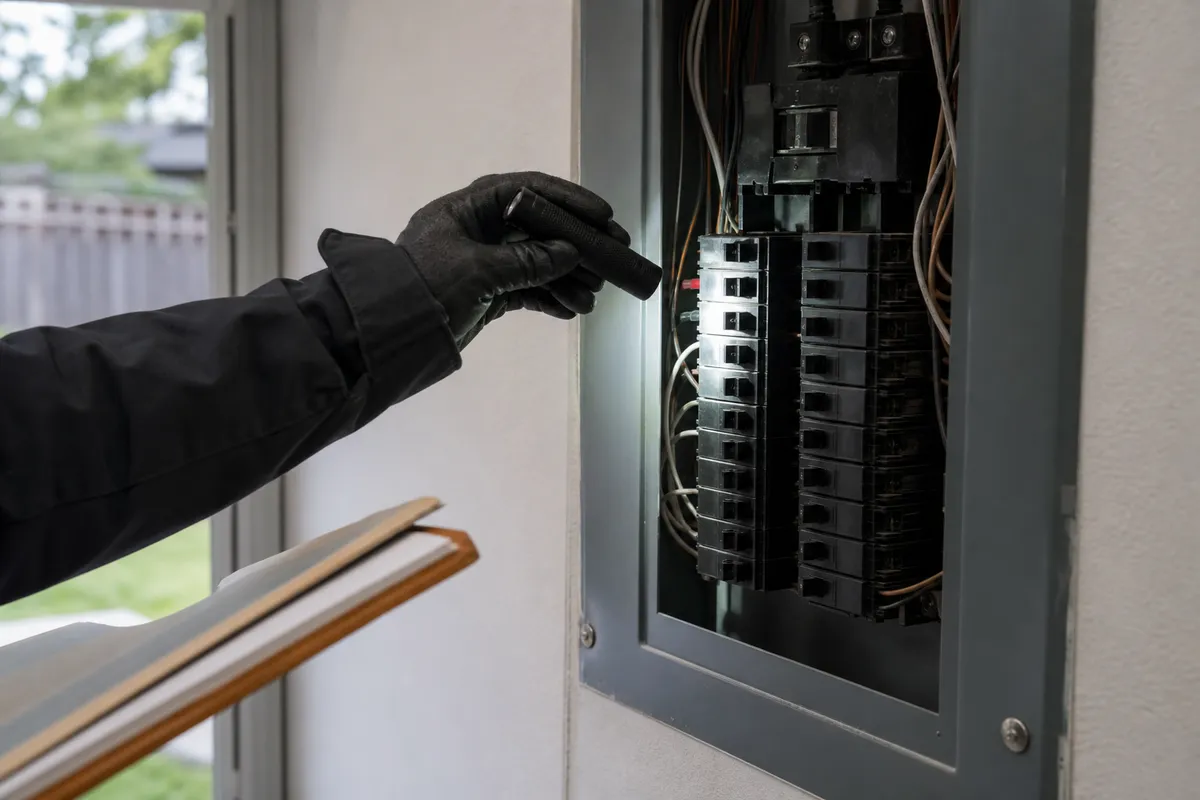
A general home inspector spends maybe twenty minutes on the electrical system of a house. They’ll pull the panel cover, test a sample of outlets, and note what they can see. That’s the scope of their job, and good inspectors are upfront about it. But in a 1948 Wallingford bungalow or a 1962 Everett rambler, the twenty-minute look is exactly where the expensive surprises hide — and by the time you find them, you own them.
I’ve done pre-purchase electrical inspections across Seattle, Bellevue, and Everett for years now, and the pattern is consistent: the houses that look fine on the listing photos are the ones that need the closest look. Here’s what a dedicated electrical inspection actually examines, what the common findings cost to fix, and a few myths worth clearing up before your inspection contingency expires.
TL;DR
- A dedicated electrical inspection runs $250–$500 and routinely identifies $2,000–$25,000 in needed work before you close — that’s negotiating leverage, not simply peace of mind.
- The big four in older Puget Sound homes: knob-and-tube wiring, Zinsco and Federal Pacific panels, 60-amp services, and aluminum branch wiring from the late 1960s.
- Knob-and-tube isn’t an automatic emergency, but insurers increasingly won’t write policies on it, which can affect your financing.
- Zinsco and FPE Stab-Lok panels have documented histories of breakers failing to trip. I recommend replacement, not monitoring.
- In Washington, electrical work requires permits — through the Department of Labor & Industries (L&I) in most of the state, or through SDCI within Seattle city limits. Unpermitted past work is itself a finding.
- A 60-amp or 100-amp service that “has worked fine for decades” will not support the heat pump, induction range, or EV charger you’re probably planning.
What “Old Wiring” Actually Means Here, Decade by Decade
Housing stock in King and Snohomish counties clusters into eras, and each era has a signature electrical issue:
| Era | What you’ll likely find | Typical concern | Typical remediation cost |
|---|---|---|---|
| Pre-1950 | Knob-and-tube, 60A service, fuse boxes | Insurance, no ground, buried in insulation | $8,000 – $25,000 for rewiring if extensive |
| 1950–1965 | Early NM cable, ungrounded outlets, small panels | Two-prong outlets, undersized service | $2,200 – $4,500 for a panel upgrade |
| 1965–1973 | Aluminum branch circuit wiring | Overheating at connections | $150 – $350 per outlet/switch remediated, or partial rewire |
| 1970s–1980s | Zinsco, Federal Pacific Stab-Lok panels | Breakers that may not trip on a fault | $2,200 – $4,500 panel replacement |
| 1990s+ | Generally sound, but DIY-era additions | Unpermitted basement/garage circuits | Case by case |
Cost ranges are what SPS Pro Services is quoting in mid-2026 for typical single-family homes; complexity and access move numbers in both directions.
“A general home inspector spends maybe fifteen minutes on the electrical system. On pre-1980 homes around Seattle, that’s not enough — we regularly find double-tapped breakers, aluminum branch wiring, and panels the insurer will refuse outright. A dedicated electrical inspection before closing costs a few hundred dollars and has saved our clients five-figure surprises.”
— Sergei Petrov, Founder & Lead HVAC Technician at SPS Pro Services
The Panels I Flag Every Time: Zinsco and Federal Pacific
If the listing photos show a panel with colorful thin breakers (Zinsco/Sylvania) or “Stab-Lok” on the label (Federal Pacific Electric), pay attention. These panels were installed by the tens of thousands here in the 1960s–1980s. The documented problem — supported by independent testing over the years, most notably on FPE Stab-Lok breakers — is that a meaningful percentage of breakers can fail to trip under overload or fault conditions. A breaker that doesn’t trip isn’t a breaker; it’s a solid piece of metal connecting a fault to your wiring.
Some electricians will tell you these panels can be “monitored.” I don’t offer that option, and I’ll explain why calmly: the failure mode is invisible. The panel looks fine right up until the day it’s asked to do its one job and doesn’t. Replacement runs $2,200–$4,500 as part of a standard electrical panel upgrade, and in a purchase negotiation it’s a well-documented, defensible repair credit to request.
Myth-Busting: Knob-and-Tube
Knob-and-tube gets talked about like it’s live dynamite. Let me give you the accurate version.
The myth: all knob-and-tube must be ripped out immediately or the house will burn down.
The reality: intact, unmodified, properly load-managed knob-and-tube was a legitimate wiring method, and some of it has run safely for a century. The actual problems are what’s happened to it since: amateur splices where someone tapped a new circuit into 1920s conductors, insulation blown over it in the attic (K&T is designed to dissipate heat in open air — burying it is a genuine hazard and a code issue), brittle insulation at fixture connections, and the total absence of a grounding conductor.
The practical reality for a buyer: even where K&T is technically serviceable, many insurers in Washington now decline coverage or surcharge heavily for homes with active knob-and-tube, and your lender will require insurance. So the question is rarely “is it safe today” — it’s “what does replacement cost and who pays for it.” That’s exactly the number an inspection puts in your hand before you waive contingencies. Whole-home rewiring runs $8,000–$25,000 depending on size and finish (plaster walls cost more to work behind than drywall).
Myth-Busting: “The 60-Amp Service Has Been Fine for 60 Years”
This one comes up in almost every pre-1950s purchase. And it’s true in a narrow sense — a 60-amp service was fine for a house with a gas furnace, a gas range, a gas water heater, and 1955-era lighting loads.
Now run the 2026 version of that house: a heat pump installation to replace the dying furnace, an induction range because you’re getting off gas, a heat pump water heater, and an EV charger installation because your next car plugs in. Under the load calculation methods in the National Electrical Code (Article 220), that house needs 200-amp service — not as a luxury, but as arithmetic. Washington has adopted the NEC statewide through L&I rulemaking, and every one of those installations will be sized against it.
The buyer’s mistake I see most often: budgeting for the heat pump and the charger, but not the $2,200–$4,500 service upgrade that has to come first. Get the service capacity into your purchase math on day one.
Permits: The Paper Trail Matters in Washington
Washington regulates electrical work more tightly than most states. Outside Seattle, electrical permits and inspections go through the Department of Labor & Industries (L&I), and you can look up a property’s permit history yourself on L&I’s website. Inside Seattle city limits, electrical permits run through the Seattle Department of Construction and Inspections instead. Either way, there should be a paper trail.
When I inspect a house and find a finished basement with new circuits, a hot tub feed, or a remodeled kitchen — and the permit history shows nothing — that’s a finding in itself. Unpermitted work isn’t automatically bad work, but it was never inspected, and statistically that’s where I find the double-tapped breakers, the missing GFCI protection in wet locations, the junction boxes buried behind drywall, and the undersized conductors. Current code also expects AFCI protection on most living-area circuits and GFCI protection in an expanding list of locations, so older unpermitted work tends to be several editions behind on safety devices that exist for good reasons.
While you’re at it: if the house has had a water heater installation or furnace swap recently, those take permits too. A seller who skipped one permit usually skipped several.
Your Pre-Offer Electrical Checklist
- Ask your agent for the panel brand and service amperage before you even tour — listing photos often show the panel.
- Pull the permit history: L&I’s online lookup for most of the metro, SDCI records for Seattle proper.
- Note the home’s build year against the table above and walk in knowing the era’s signature issue.
- Book the dedicated electrical inspection ($250–$500) inside your inspection contingency window — we can usually schedule within a few days.
- Get written repair estimates for anything found, so your negotiation is numbers, not adjectives.
- If you’re planning electrification — heat pump, EV, induction — have the load calculation done now, not after closing.
Mini-FAQ
Isn’t the general home inspection enough? For newer homes, often yes. For pre-1980 homes, a general inspector will typically note “recommend evaluation by a licensed electrician” — which is the industry’s way of saying the twenty-minute look found the edge of something. The dedicated inspection is what answers the question the general inspection raises.
Can I negotiate the price down based on electrical findings? Routinely. A documented Zinsco panel or active knob-and-tube with a written replacement estimate is one of the strongest repair-credit requests you can make, because the numbers come from a licensed contractor, not a guess.
Do two-prong outlets mean the house needs a full rewire? No. Ungrounded outlets have several code-compliant remediation paths, including GFCI protection with proper labeling. It’s a finding worth pricing, but it’s on a different scale than knob-and-tube or a hazardous panel. Don’t let anyone use two-prong outlets alone to sell you a $20,000 rewire.
If you’re in an inspection window on a home in Seattle, Bellevue, Everett, or anywhere in between, call SPS Pro Services at (206) 427-8907. We’ll get you a thorough electrical inspection and written findings you can take straight into negotiations.