
A customer in Shoreline called me last month convinced her ductwork was “full of black mold” because a flyer in her mailbox said whole-house cleaning was $99. I got up in her attic, ran a camera down the trunk line, and found dust — normal dust, the kind every house older than five years has. No mold. She saved $2,000 by not signing that contract. That’s the kind of story that shapes how I quote this job.
Duct cleaning is one of the most oversold services in HVAC. It’s also, sometimes, genuinely worth doing. Here’s what it actually costs in King and Snohomish counties, and how to tell which situation you’re in.
TL;DR
- Most legitimate whole-house duct cleaning jobs in the Seattle area run $450–$900 for an average single-family home.
- Larger homes (2,500+ sq ft) or homes with two HVAC zones often land $900–$1,400.
- The $99–$149 “whole house” ads almost always cover only the main trunk lines, not registers or the furnace coil.
- If you don’t have visible mold, rodent activity, or recent construction dust, cleaning ducts rarely improves air quality enough to justify the cost — a good filter and a furnace tune-up often do more.
- Duct cleaning does not fix a leaking or undersized duct system. That’s a separate repair, and I’ll tell you honestly if that’s your real problem.
What Actually Happens During a Real Cleaning Job
Here’s how I explain it to homeowners in Seattle, Bellevue, and Everett who’ve never had this done before.
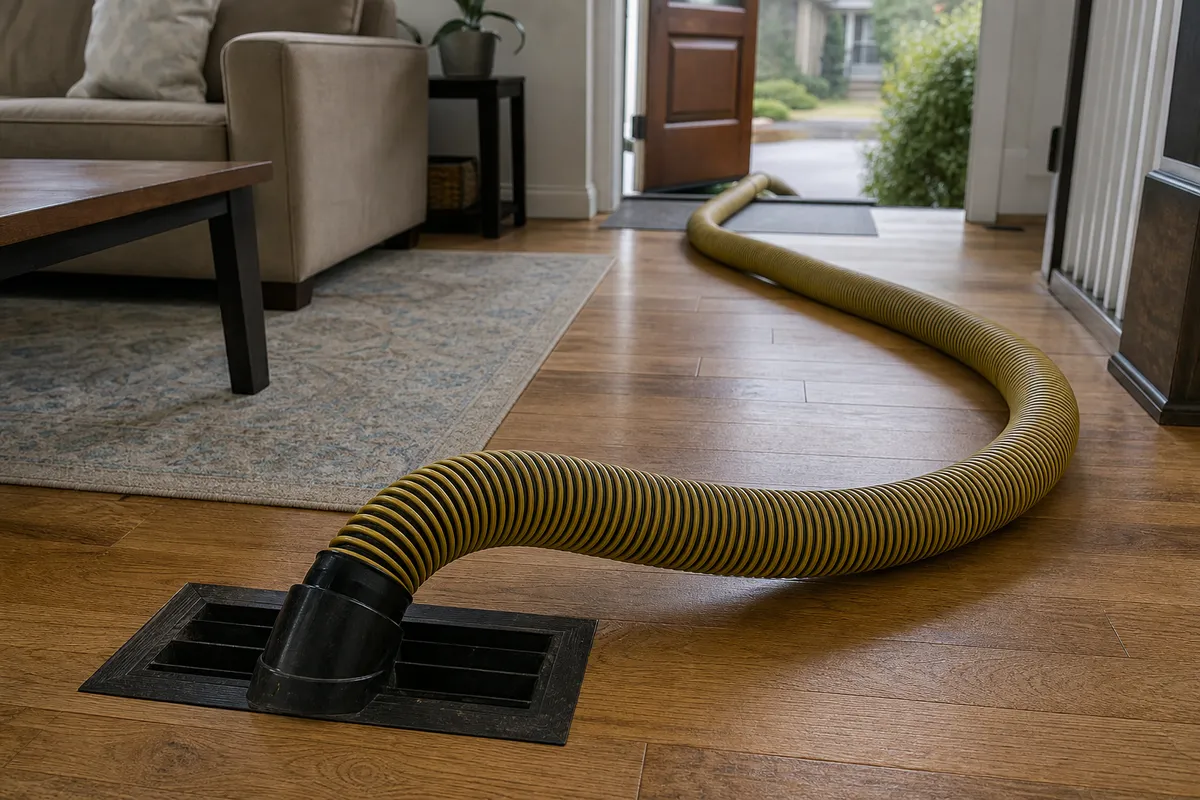
A proper job uses a negative-air machine — basically a giant vacuum — connected to your main trunk, while a technician goes register by register with a rotary brush or air whip to knock debris loose so the vacuum can pull it out. That includes the supply side, the return side, and ideally the furnace or air handler cabinet itself, since that’s where the blower motor lives and where the coil sits.
A crew doing this correctly spends 3 to 5 hours in an average 1,800–2,200 sq ft home. If someone quotes you 45 minutes and a flat $99, they are not cleaning your ducts — they’re doing a cursory pass on two or three main lines and calling it done. I’ve inspected work like that after the fact for customers who felt something was off, and it’s obvious once you pull a register cover.
“When people call to book duct cleaning, I always ask what prompted it. If it’s visible mold, a renovation, or evidence of pests, it’s worth doing. If it’s a $99 coupon that showed up in the mailbox, I tell them honestly: that price usually turns into a $600 upsell once the crew is in your crawlspace.”
— Alina Kovalenko, Service Coordinator & Comfort Advisor at SPS Pro Services
Real Seattle-Area Pricing
These numbers come from typical job tickets across King and Snohomish counties, not national averages that don’t account for our housing stock — a lot of homes here were built in the 1960s–80s with duct systems that have never been touched.
| Home size / scope | Typical estimate | Notes |
|---|---|---|
| Small home or condo, single system (under 1,500 sq ft) | $350–$500 | Fewer registers, single trunk line |
| Average single-family home (1,500–2,500 sq ft), one system | $450–$900 | Most common job we run |
| Larger home (2,500–3,500 sq ft) or two HVAC zones | $900–$1,400 | Two systems means two full cleanings |
| Add-on: dryer vent cleaning | $100–$175 | Different equipment, often bundled |
| Add-on: sanitizing treatment (post-mold remediation only) | $150–$300 | Only recommended after confirmed mold, not routine |
If a company quotes you a number way outside these ranges in either direction, ask what’s included. Cheap quotes usually mean partial cleaning. Expensive quotes sometimes include unnecessary “sanitizing fog” treatments that aren’t needed unless you’ve had confirmed mold or sewage contamination.
When It’s Actually Worth Doing
I recommend duct cleaning when I see one of these on a job site:
- Visible mold growth inside the ducts or on the coil (confirmed visually, not assumed from a smell)
- A home that just went through a major renovation with drywall dust pulled into the return
- Evidence of rodent or bird entry into the duct system
- A system that’s been shut off and unused for years, especially in a vacant home before move-in
- Chronic dust buildup on registers within days of cleaning, paired with a family member with respiratory issues
When I Tell Customers to Save Their Money
This is the part most companies won’t say out loud. Duct cleaning does not:
- Lower your energy bill in any measurable way
- Fix short-cycling or uneven heating — that’s almost always a duct sizing, balancing, or equipment problem, and if your furnace is struggling, the real fix is often a proper furnace repair visit, not a vacuum truck
- Resolve allergy symptoms if the real source is pet dander recirculating through a dirty filter — swapping to a MERV 11 filter and setting a reminder to change it every 60–90 days does more for $15 than a $700 cleaning does
- Address moisture or mold at the source if there’s a duct leak dumping conditioned air into a damp crawlspace — that leak needs sealing, not cleaning
If your house is under 10 years old, has never had a leak, and you just don’t like the idea of “old dust,” I’ll tell you straight: it’s optional, not necessary. I’d rather lose that $600 job than sell something you don’t need.
What Actually Drives the Price on Your Job
A few things move the number up or down more than square footage alone:
Number of registers. A home with 18 supply and return registers takes longer than one with 10, regardless of total square footage.
Attic or crawlspace access. Ducts run through a tight, unfinished crawlspace under an older Everett rambler take longer to reach than ducts in an open unfinished basement.
System age and construction. Homes with flex duct (common in additions and remodels since the 1990s) clean differently than older homes with rigid sheet metal trunks — sheet metal takes brushing longer but often cleans more completely.
Two-zone or two-system homes. If you added a second system when you finished a basement or built an addition, budget for two separate cleanings, not one job at a slight upcharge.
Before You Book: A Practical Checklist
- Ask if the quote includes the furnace or air handler cabinet, not simply duct runs
- Ask what equipment they use — a truck-mounted or portable negative-air vacuum, not a shop-vac with an attachment
- Get the register count they’re basing the price on, so you can compare quotes apples to apples
- Confirm whether dryer vent cleaning is separate — it should be, since it’s a different job with different equipment
- If they push a “sanitizing fog” as standard, ask what specific problem it’s solving in your home
- If your real complaint is uneven heating, weak airflow, or high bills, ask for a system diagnostic first — sometimes the fix is a filter change, sometimes it’s closer to a heat pump installation conversation if your equipment is past 15 years old
Mini FAQ
How often should ducts actually be cleaned? For most homes with no mold, pests, or major renovation dust, every 7-10 years is reasonable. There’s no strong evidence that annual or even every-3-year cleaning improves air quality in a typical home without a specific contamination issue.
Will duct cleaning help my allergies? Sometimes, modestly, if the dust load is heavy and the filter has been neglected. It won’t outperform a proper filter upgrade and regular furnace maintenance for most households.
Can dirty ducts damage my furnace or AC? Heavy buildup can restrict airflow and make your blower motor work harder over time, which can shorten equipment life. If you’re also noticing weak cooling in summer, get that checked separately through an AC repair visit, since airflow restriction and low refrigerant show similar symptoms but need different fixes.
If you want an honest look at your ducts before spending money on a service you might not need, call SPS Pro Services at (206) 427-8907 and we’ll tell you straight what’s actually going on.