
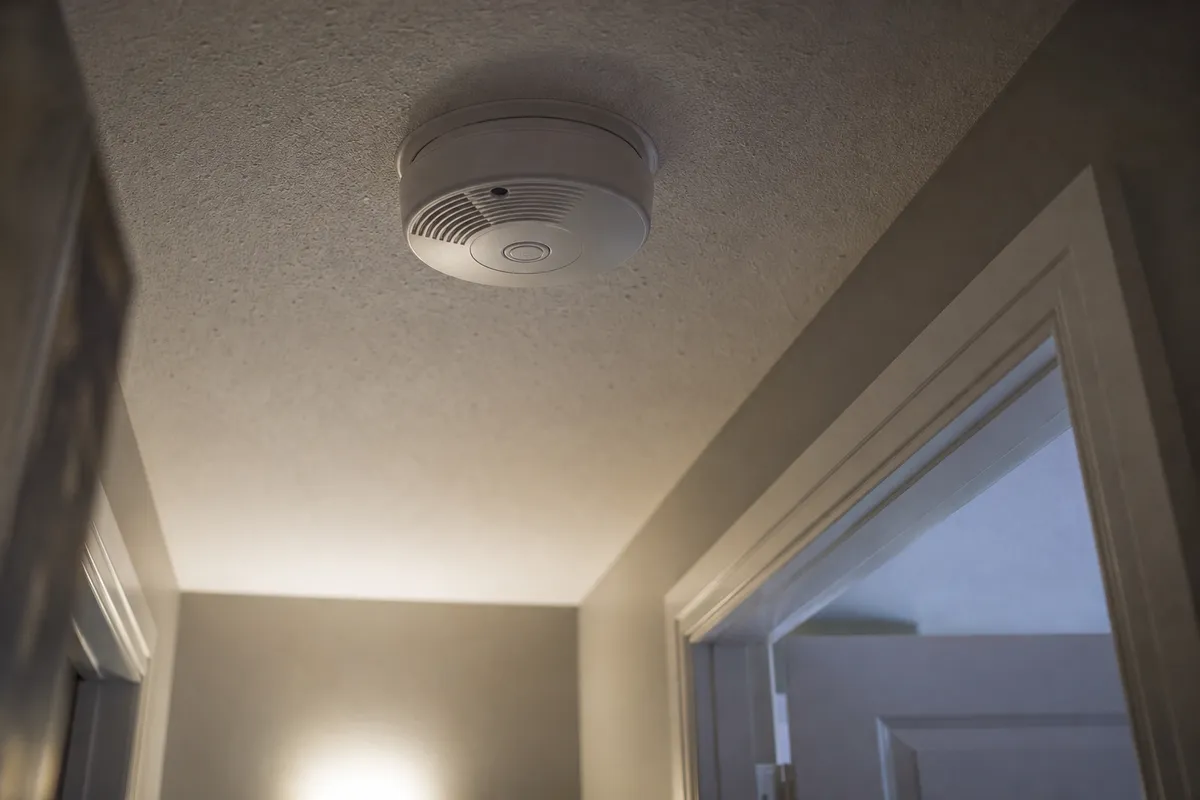
I got a call last winter from a homeowner in Bellevue who’d had a CO alarm going off every few nights. She’d been resetting it and going back to sleep. Turned out her furnace heat exchanger had a hairline crack, and the alarm was doing exactly what it was built to do. That’s the story that sticks with me every time someone asks whether CO detectors are “really necessary” or just another code box to check.
Carbon monoxide doesn’t smell like anything. It doesn’t announce itself. In older Seattle-area housing stock — a lot of it built before 1980, before tighter combustion venting standards — a failing furnace, water heater, or even a blocked chimney can push CO into living space fast. Washington took this seriously enough to write it into state law, beyond building code. Here’s what that law actually requires, where people get it wrong, and how it intersects with the electrical work I do every week.
TL;DR
- Washington RCW 19.27.530 requires CO alarms in nearly all dwellings with fuel-burning appliances, fireplaces, or attached garages — rentals included.
- Alarms go outside each sleeping area and on every level of the home, including basements.
- Battery units last about 7-10 years; sealed lithium units are rated 10 years; sensors degrade even if the alarm never “goes off.”
- Hardwired and interconnected CO/smoke combo units fall under NEC Article 210 and 760 wiring rules, and in WA, that electrical work needs to be done to L&I standards.
- If your panel is older than 20 years or already full, adding hardwired detectors is a good moment to talk about an electrical panel upgrade.
What Washington State Actually Requires
RCW 19.27.530, adopted after a string of preventable deaths tied to generators and faulty furnaces, requires carbon monoxide alarms in:
- Every new residential construction and any existing home undergoing a sale (many King County and Snohomish County jurisdictions tie this to the point-of-sale inspection).
- All rental units, regardless of age — landlords are legally responsible for installing and maintaining them.
- Any dwelling with a fuel-burning appliance (gas furnace, gas water heater, wood stove, gas fireplace) or an attached garage.
That last part catches people off guard. If you’ve got an attached garage and you park a car in it, even an all-electric home needs a CO alarm near the entry door from the garage into the house. Cars idling, even briefly, push enough CO through that shared wall assembly to matter.
The state law doesn’t dictate brand or wiring method, but it does require the alarm to be listed to UL 2034 and installed per manufacturer instructions — which brings us to placement.
“Every combustion-appliance service call is also a CO conversation. Cracked heat exchangers, blocked flues and backdrafting water heaters are exactly how CO ends up in living space, and the alarm outside each sleeping area is the last line, never the first. Check the date on yours — sensors age out even when the test button chirps.”
— Sergei Petrov, Founder & Lead HVAC Technician at SPS Pro Services
Where CO Alarms Actually Need to Go
I see three placement mistakes constantly on service calls:
Mistake 1: Only one alarm in the whole house. Code and manufacturer instructions call for an alarm outside each separate sleeping area, and one on every level, including basements. A split-level in Everett with bedrooms upstairs and a rec room downstairs needs at least two, sometimes three.
Mistake 2: Mounting right next to the furnace or water heater. CO alarms don’t need to sit next to the suspected source — they need to sit where people breathe air overnight. Manufacturer specs generally call for at least 15 feet from fuel-burning appliances to avoid nuisance trips during startup combustion.
Mistake 3: Ceiling mount, high up. Unlike smoke, CO mixes fairly evenly with room air and doesn’t reliably rise to ceiling height the way hot smoke does. Most manufacturers spec 5 feet or lower from the floor, or plug-in units at outlet height. Check your specific unit — First Alert and Kidde differ slightly — but “as high as possible” is the wrong instinct here.
Myth: “My Smoke Detector Covers CO Too”
Not unless it’s specifically labeled as a combination smoke/CO alarm. A standard ionization or photoelectric smoke detector has zero CO sensing capability — different sensor technology entirely. I’ve pulled plenty of “detectors” off ceilings during furnace jobs that were smoke-only, installed by a previous owner who assumed one alarm did everything. If you’re not sure what’s on your ceiling, check the label. It’ll say “CO” somewhere if it senses carbon monoxide.
Myth: “If It Hasn’t Alarmed, the Sensor’s Fine”
CO sensors are electrochemical — they have a working life independent of whether they’ve ever triggered. Most battery and plug-in units are rated 7 years; sealed 10-year lithium units are common now. After that window, the sensor drifts and sensitivity drops, alarm or no alarm. Manufacturers print a “replace by” date on the back of the unit — I check that date on every service call where I’m near a detector, the same way I’d check a filter date on a furnace repair visit.
Hardwired vs. Battery vs. Combo: What It Actually Costs
Here’s roughly what I see across Seattle, Bellevue, and Everett jobs, installed by a licensed electrician with proper interconnection:
| Type | Unit cost (per detector) | Labor (per detector, existing wiring) | Labor (new wiring run) | Lifespan |
|---|---|---|---|---|
| Battery-only CO alarm | $20-$40 | DIY, no labor | N/A | 7-10 years |
| Plug-in CO alarm | $30-$50 | DIY, no labor | N/A | 7-10 years |
| Hardwired CO alarm (interconnected) | $45-$70 | $90-$150 | $200-$350 per unit | 10 years |
| Combo smoke/CO hardwired | $60-$100 | $100-$175 | $250-$400 per unit | 10 years |
| Whole-house interconnected system (4-6 units, new construction or major remodel) | — | — | $1,200-$2,200 total | 10 years |
Battery and plug-in units are fine for code compliance in most existing homes and are the fastest fix if you just need coverage today. Hardwired interconnected systems make more sense during a remodel, a panel upgrade, or new construction, because every alarm in the house trips together — a CO event in the basement wakes up the upstairs bedrooms too.
Where Electrical Code Actually Applies
Hardwired smoke and CO alarms are low-voltage life-safety circuits, but they still tie into your home’s electrical system, and NEC Article 210.12 and local WA amendments govern how those circuits get protected and wired. In practice, that means:
- Hardwired detectors need a dedicated, unswitched circuit or a properly tapped circuit — never simply spliced into whatever junction box is closest.
- Interconnection wiring (the wire that makes all alarms in the house trigger together) has to follow low-voltage separation rules from line-voltage wiring in the same box.
- Any electrical work on these circuits in Washington requires a licensed electrical contractor and, in most jurisdictions, a permit and L&I inspection — this isn’t a “handyman special.”
If your electrical panel is already maxed out with circuits for an EV charger installation, a heat pump, or an addition, adding hardwired detector circuits might be the tipping point that makes a panel upgrade worth scheduling at the same time. I’d rather open the panel once and do three jobs than have three separate service calls over two years.
Practical Checklist
- Count your sleeping areas and levels — you need one CO alarm per sleeping area, minimum one per floor.
- Check the “replace by” date stamped on the back of every unit in the house.
- Confirm units near fuel-burning appliances are at least 15 feet away, per manufacturer spec.
- Verify smoke-only units aren’t being mistaken for CO coverage.
- If you have an attached garage, confirm there’s an alarm at the interior garage entry door.
- If adding hardwired units, use a licensed electrician and pull a permit — don’t splice into existing romex yourself.
- Test alarms monthly with the test button; replace backup batteries yearly even on hardwired units.
FAQ
Do I need a CO alarm if my whole house is electric — furnace, water heater, everything? If there’s no fuel-burning appliance and no attached garage, Washington’s RCW 19.27.530 CO alarm requirement generally doesn’t apply. Fully electric homes with heat pumps and electric water heaters are becoming more common in newer Seattle-area builds, and that’s one upside. If you’re considering the switch, a heat pump installation removes a combustion source from the equation entirely.
Can I install a hardwired CO detector myself? Not legally, in most cases. Tying into house wiring for an interconnected life-safety circuit requires a licensed electrical contractor and typically a permit in King and Snohomish counties. Battery and plug-in units are fine for DIY.
My water heater is gas — does that change my CO alarm requirements? Yes. Any fuel-burning appliance, including a gas water heater, triggers the state CO alarm requirement for the dwelling. If your water heater is older and you’re noticing pilot light issues or soot near the burner, get it checked — that’s a common early sign of incomplete combustion. A water heater repair visit is a lot cheaper than a CO scare.
If you’re not sure your home in Seattle, Bellevue, or Everett is covered correctly, or you want hardwired detectors added during a panel or HVAC project, call SPS Pro Services at (206) 427-8907 and we’ll walk the house with you.