
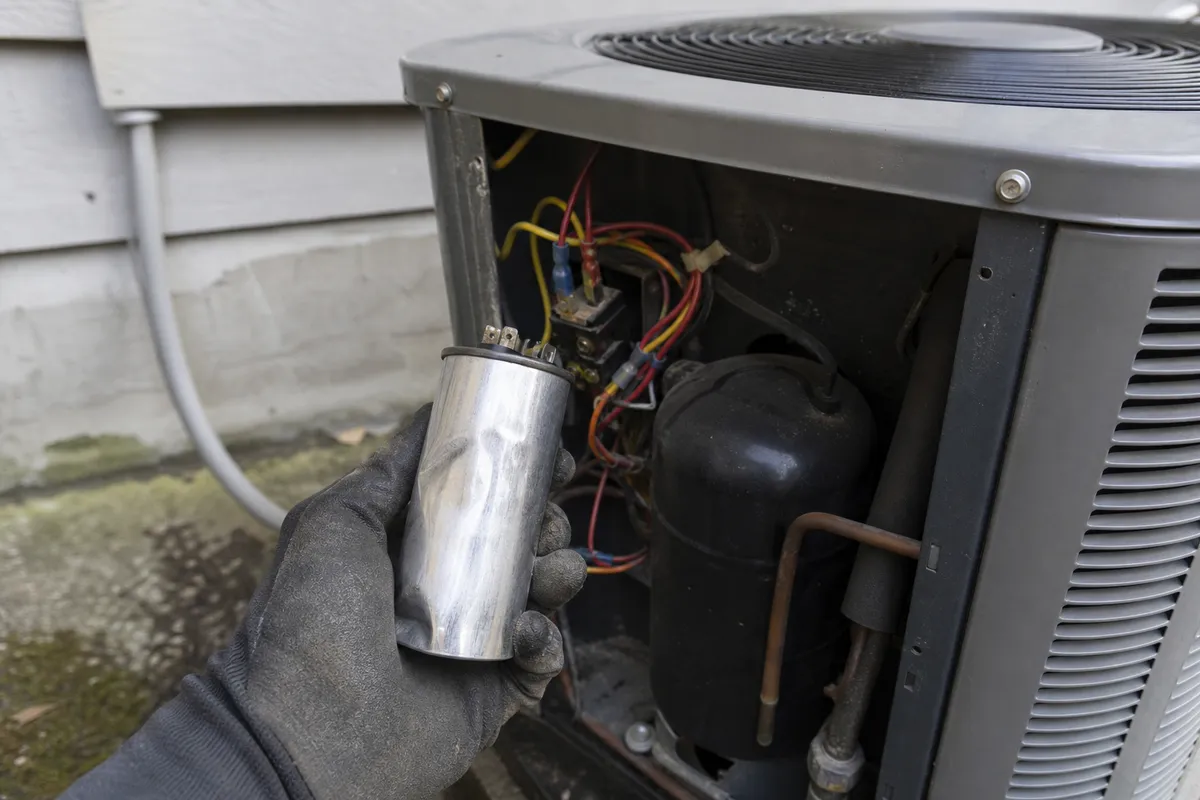
Your AC turns on, the fan spins, and warm air comes out anyway. That’s the moment most homeowners in Seattle or Bellevue call me convinced they need a whole new outdoor unit. Sometimes that’s true. Sometimes it’s a $180 capacitor. I’ve pulled panels off hundreds of condensers over the years, and I want to walk you through exactly how I figure out which one you’re dealing with before anyone starts talking about a $2,500 repair bill.
TL;DR
- Warm air from AC vents, loud clanking, or the outdoor unit humming without starting are the top three compressor red flags.
- A failed capacitor causes the same symptoms as a dying compressor about 60% of the time in my experience — always rule it out first.
- Compressor replacement on a residential system typically runs $1,800–$3,800 in the Seattle area, parts and labor combined.
- If the unit is over 12 years old, replacing the whole system often costs less over 5 years than replacing just the compressor.
- Freon type matters: R-22 systems (installed before 2010) rarely justify a compressor swap because the refrigerant itself costs more than the part.
What a Compressor Actually Does (and Why It Fails)
The compressor is the heart of your AC system. It pressurizes refrigerant and pushes it through the coils so heat can move from inside your house to the outside air. It runs hard, especially during our short but intense July and August heat spikes when King and Snohomish County temps push past 85°F and every AC in the neighborhood is maxed out at once.
Compressors fail for a handful of predictable reasons:
- Electrical strain — a weak capacitor or contactor forces the compressor to work harder on every startup, which cooks the windings over time.
- Low refrigerant — running low on charge starves the compressor of the oil that lubricates it. Dry-running kills compressors fast.
- Age — most residential compressors are rated for 10-15 years. Past that, metal fatigue and worn bearings catch up with the unit.
- Dirty coils — a condenser coil coated in cottonwood fluff or fir needles (common in Everett and the north Sound) makes the compressor fight against poor airflow constantly.
- Electrical supply issues — voltage sags from an overloaded panel can shorten compressor life. If your house still runs a 100-amp panel with a mini-split, EV charger, and central AC all fighting for power, that’s worth a look — see our page on electrical panel upgrades if you’re not sure what you’re working with.
“A compressor almost never dies out of nowhere — it gets killed slowly by a weak capacitor, dirty coils, or running low on charge for two summers straight. The $250 capacitor swap and a coil rinse are how you avoid the $2,500 conversation. When we catch hard-starting early, that compressor usually gets years more life.”
— Sergei Petrov, Founder & Lead HVAC Technician at SPS Pro Services
Signs Your Compressor Is on Its Way Out
Here’s what I listen and look for on a service call:
- Warm air from supply vents while the outdoor fan runs normally. This usually means the compressor isn’t pumping refrigerant at all.
- Hard start delay — the outdoor unit hums for 3-5 seconds before kicking on, or doesn’t kick on at all. Classic capacitor or start-relay symptom, but it stresses the compressor every time it happens.
- Loud clanking or grinding from the outdoor unit. That’s often a broken internal component rattling inside the shell — not a great sign.
- Circuit breaker trips repeatedly when the AC cycles on. Could be the compressor drawing excessive amperage.
- Oil spots on the ground or on refrigerant lines near the unit. Compressors leak oil when internal seals fail.
- System short-cycling — turns on, runs two minutes, shuts off, repeats. Often a sign of overheating protection kicking in to save what’s left of the compressor.
If you’re seeing two or more of these, it’s worth an emergency AC repair visit before the compressor seizes completely, which turns a repair into a full system replacement.
How I Test a Compressor in the Field
I don’t guess. Here’s the sequence:
- Visual and amp-draw check. I check the compressor’s running amps against the nameplate rating (RLA). Amps running 15-20% over spec usually mean internal binding.
- Capacitor test. A $15 capacitor with weak microfarad rating mimics compressor failure almost perfectly. I test this before touching anything else.
- Megohmmeter (megger) test on the windings. This checks for insulation breakdown — a grounded or shorted winding shows up immediately and confirms compressor failure with no ambiguity.
- Refrigerant pressure check. Low suction pressure with normal head pressure often points to a valve problem inside the compressor itself rather than a leak.
- Listen test. A compressor trying to start but failing (a loud single “clunk” then silence) usually means a locked rotor — the motor can’t turn at all.
This whole process takes me 30-45 minutes on a typical service call and it’s the only way to avoid replacing a part that wasn’t broken.
Repair vs. Replace: Real Cost Comparison
Here’s what I quote most often in the Seattle metro area, based on a standard 2.5 to 3-ton residential split system:
| Scope of Work | Typical Cost Range | Notes |
|---|---|---|
| Capacitor or contactor replacement | $150–$350 | Often resolves “compressor” symptoms entirely |
| Compressor replacement (R-410A system) | $1,800–$3,800 | Parts, refrigerant recovery, labor, warranty on part |
| Compressor replacement (R-22 system) | $2,800–$4,500 | Refrigerant cost inflated since R-22 production phased out |
| Full outdoor condenser replacement | $4,500–$7,500 | Matched with existing indoor coil if compatible |
| Full system replacement (AC + coil) | $7,000–$12,000 | Includes new refrigerant lines, permit, disposal |
| Heat pump conversion instead of AC-only | $9,000–$15,000 | Adds heating capability, qualifies for PSE and Snohomish PUD rebates |
If your system is under 8 years old and still on R-410A refrigerant, a compressor swap is usually the smarter move financially. If it’s older than 12 years or still running R-22, I generally recommend clients put that money toward a new system instead — you’ll spend similar dollars on the compressor alone and still be stuck with an aging coil and blower motor.
This is also the point where I bring up heat pumps. A lot of homeowners in Seattle and Bellevue are surprised that a heat pump replacement costs close to the same as AC-only replacement but also handles winter heating, cutting or eliminating a separate furnace bill. If you’re already facing a $4,000+ AC repair decision, it’s worth getting a quote on heat pump installation before committing to AC-only.
Practical Homeowner Checklist
Before you call anyone, run through this:
- Check your thermostat batteries and settings — sounds obvious, but it happens weekly.
- Check your breaker panel for a tripped breaker on the AC circuit.
- Look at the outdoor unit — is the fan spinning? Is it making noise? Is anything visibly leaking?
- Change your air filter if it’s been more than 60-90 days. A clogged filter restricts airflow and can trigger false compressor symptoms.
- Clear leaves, grass clippings, or debris from around the outdoor unit — at least 2 feet of clearance on all sides.
- Note exactly what you hear and when — a hum with no start, a click with no hum, or a normal start followed by warm air. This detail saves diagnostic time and money.
- If your electrical panel is older than 20 years or under 150 amps, mention it when you call — it’s relevant to compressor longevity and to anything else you might add later, like an EV charger installation.
A Word on Furnaces and Water Heaters While We’re Here
If your AC and furnace share a blower cabinet, a compressor failure sometimes coincides with the discovery of other aging components. It’s common for me to flag a furnace heat exchanger issue on the same visit — if that sounds familiar, our furnace repair page covers what those symptoms look like. Similarly, if your water heater is the same age as your AC system, you’re probably due for a look there too — see water heater repair for common failure signs.
Mini-FAQ
Can a bad compressor be repaired without replacing it? No. Compressors are sealed units. If the windings are shorted or the internal mechanics are damaged, the whole compressor gets replaced — there’s no field rebuild option for residential equipment.
How long does a compressor replacement take? Most jobs take 3-5 hours for R-410A systems, longer for R-22 systems due to refrigerant recovery and handling requirements. You’ll be without cooling for the day.
Is it normal for a compressor to hum without starting? No — that’s a sign of a failed or weak start capacitor, bad start relay, or in worse cases, a locked rotor inside the compressor. Don’t let it keep trying to start on its own; repeated attempts can finish off a compressor that might have been saved by an early capacitor swap.
If your outdoor unit is humming, clanking, or blowing warm air anywhere from Everett to Bellevue, get it looked at before it fully seizes — call SPS Pro Services at (206) 427-8907 or check our AC repair page for what a diagnostic visit covers.